Part VIII. Botany for Painters, and Elements of Landscape Painting
The Notebooks of Leonardo da Vinci · translated by Jean Paul Richter · § 393 to 481 · 5 plates · public domain · plain text
Nothing in this part mentions that.
Richter’s introduction to this part
The chapters composing this portion of the work consist of observations on Form, Light and Shade in Plants, and particularly in Trees summed up in certain general rules by which the author intends to guide the artist in the pictorial representation of landscape.
With these the first principles of a Theory of Landscape painting are laid down—a theory as profoundly thought out in its main lines as it is lucidly worked out in its details. In reading these chapters the conviction is irresistible that such a Botany for painters is or ought to be of similar importance in the practice of painting as the principles of the Proportions and Movements of the human figure i. e. Anatomy for painters.
There can be no doubt that Leonardo, in laying down these rules, did not intend to write on Botany in the proper scientific sense—his own researches on that subject have no place here; it need only be observed that they are easily distinguished by their character and contents from those which are here collected and arranged under the title 'Botany for painters'. In some cases where this division might appear doubtful,—as for instance in No. 402—the Painter is directly addressed and enjoined to take the rule to heart as of special importance in his art.
The original materials are principally derived from MS. G, in which we often find this subject treated on several pages in succession without any of that intermixture of other matters, which is so frequent in Leonardo's writings. This MS., too, is one of the latest; when it was written, the great painter was already more than sixty years of age, so we can scarcely doubt that he regarded all he wrote as his final views on the subject. And the same remark applies to the chapters from MSS. E and M which were also written between 1513–15.
For the sake of clearness, however, it has been desirable to sacrifice—with few exceptions—the original order of the passages as written, though it was with much reluctance and only after long hesitation that I resigned myself to this necessity. Nor do I mean to impugn the logical connection of the author's ideas in his MS.; but it will be easily understood that the sequence of disconnected notes, as they occurred to Leonardo and were written down from time to time, might be hardly satisfactory as a systematic arrangement of his principles. The reader will find in the Appendix an exact account of the order of the chapters in the original MS. and from the data there given can restore them at will. As the materials are here arranged, the structure of the tree as regards the growth of the branches comes first (394-411) and then the insertion of the leaves on the stems (412-419). Then follow the laws of Light and Shade as applied, first, to the leaves (420-434), and, secondly, to the whole tree and to groups of trees (435-457). After the remarks on the Light and Shade in landscapes generally (458-464), we find special observations on that of views of towns and buildings (465-469). To the theory of Landscape Painting belong also the passages on the effect of Wind on Trees (470-473) and on the Light and Shade of Clouds (474-477), since we find in these certain comparisons with the effect of Light and Shade on Trees (e. g.: in No. 476, 4. 5; and No. 477, 9. 12). The chapters given in the Appendix Nos. 478 and 481 have hardly any connection with the subjects previously treated.
Small, lofty, straggling, thick, that is as to foliage, dark, light, russet, branched at the top; some directed towards the eye, some downwards; with white stems; this transparent in the air, that not; some standing close together, some scattered.
L. 87a
The relative thickness of the branches to the trunk (393–396)
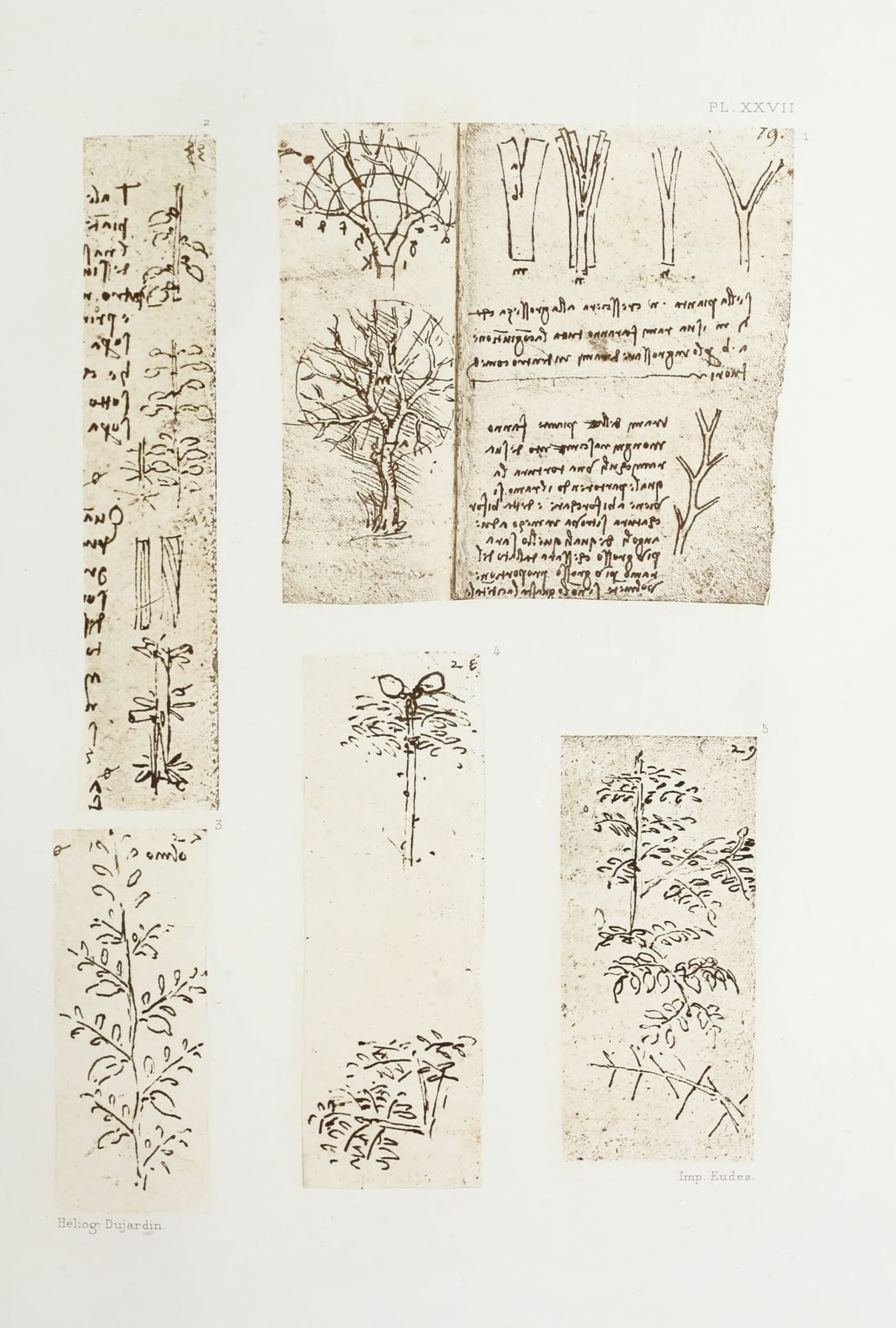
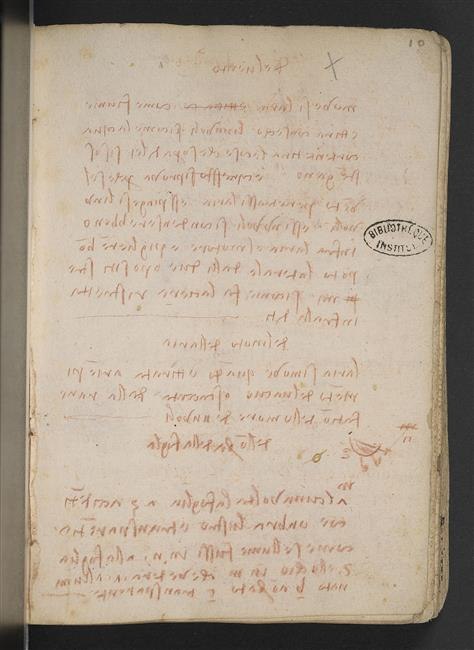
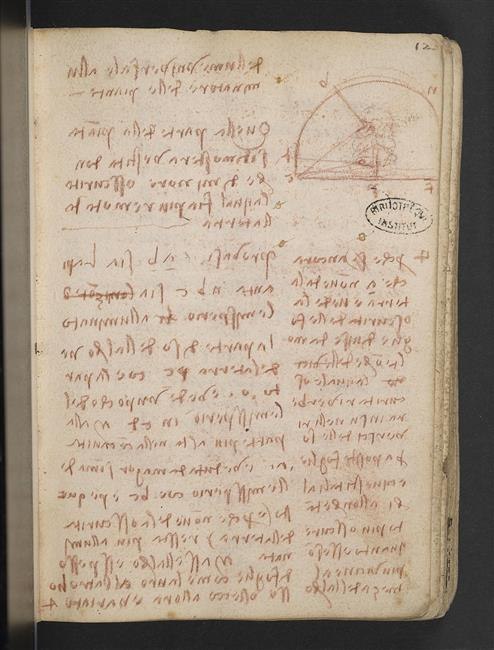
Every year when the boughs of a plant [or tree] have made an end of maturing their growth, they will have made, when put together, a thickness equal to that of the main stem; and at every stage of its ramification you will find the thickness of the said main stem; as: i k, g h, e f, c d, a b, will always be equal to each other; unless the tree is pollard—if so the rule does not hold good.
All the branches have a direction which tends to the centre of the tree m.
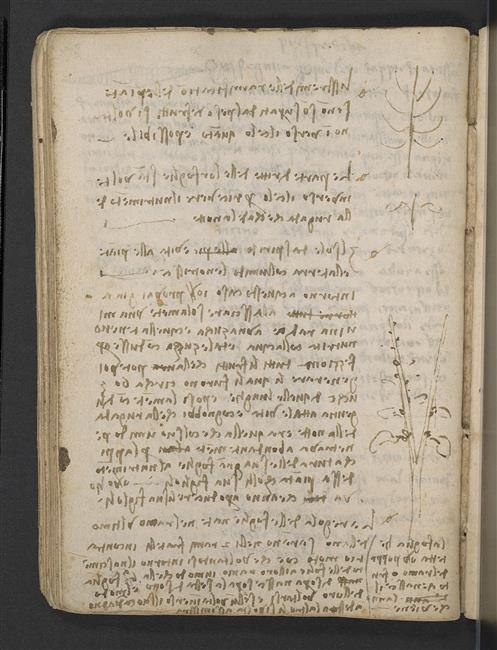
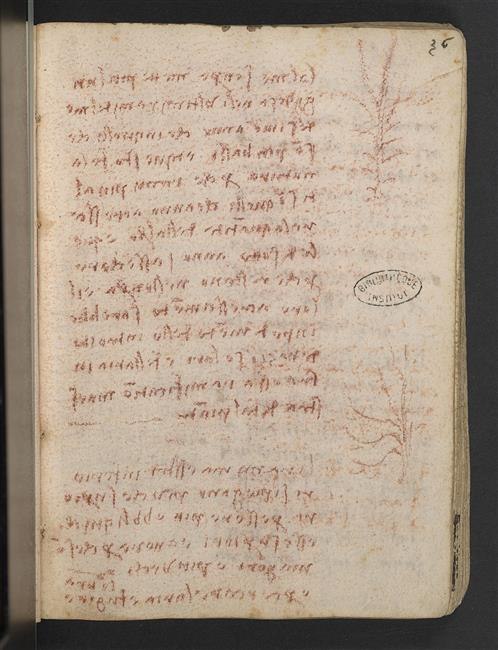
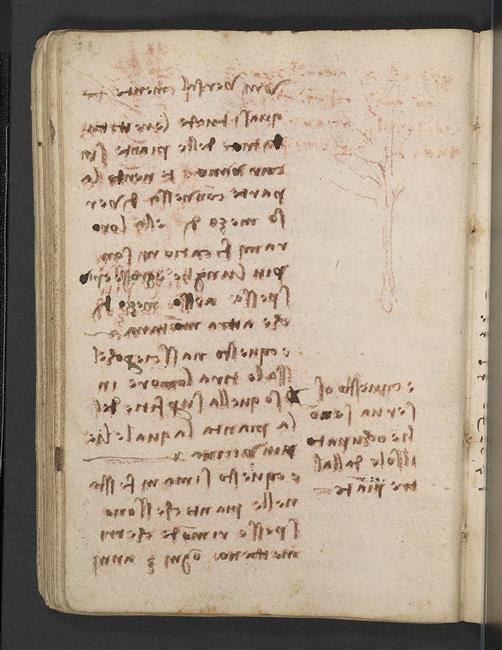
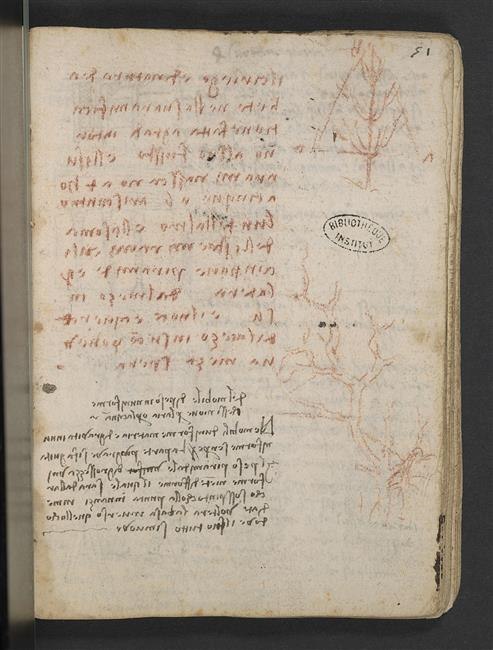
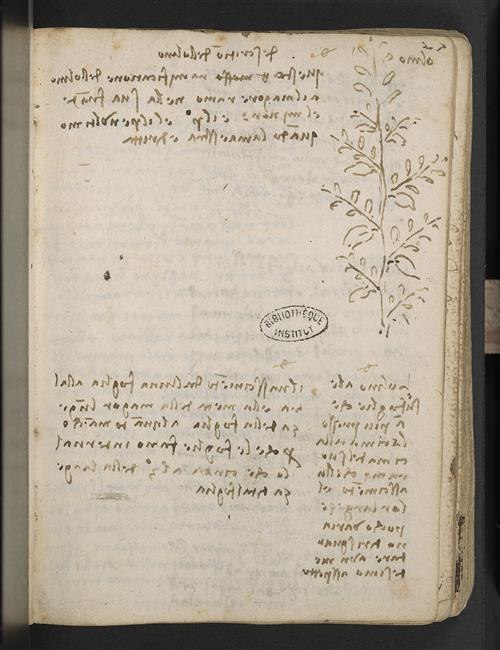
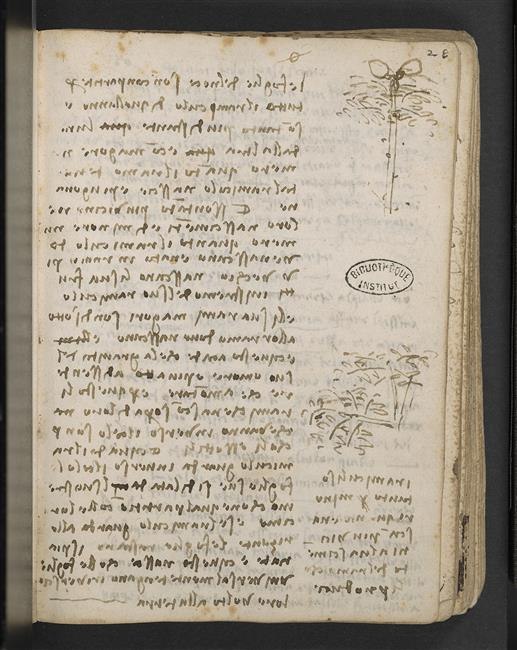
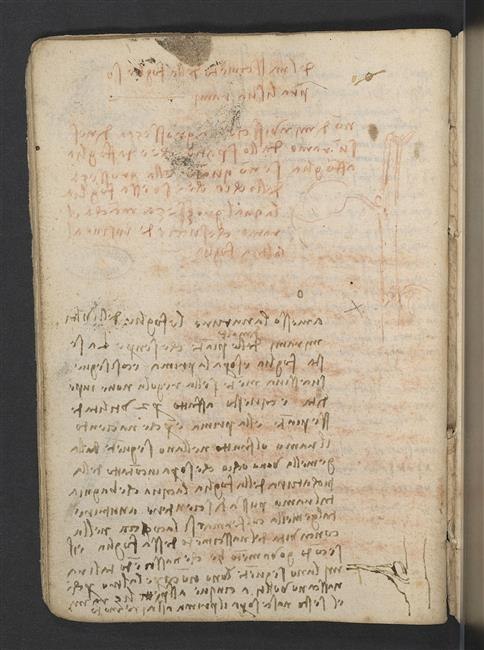
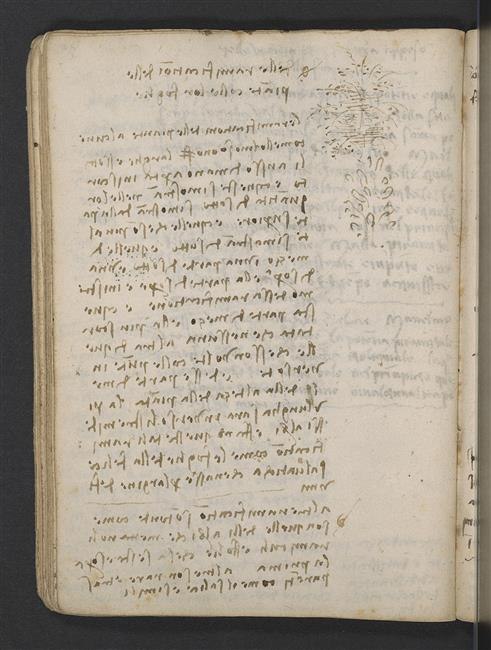
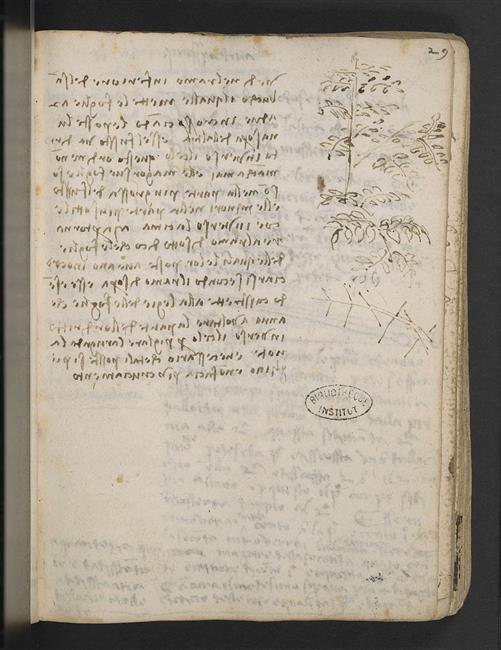
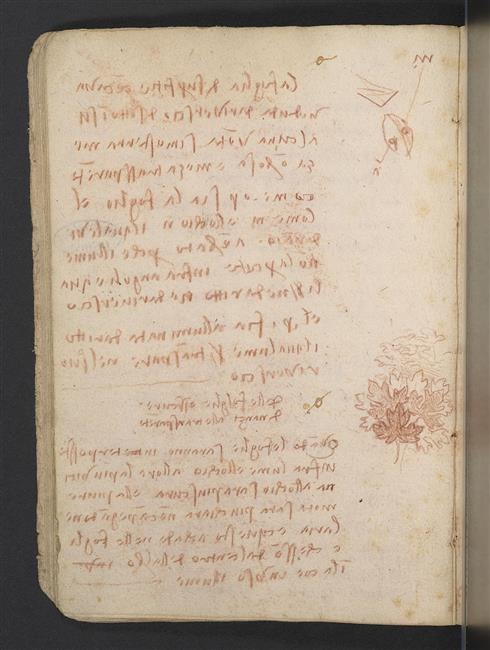
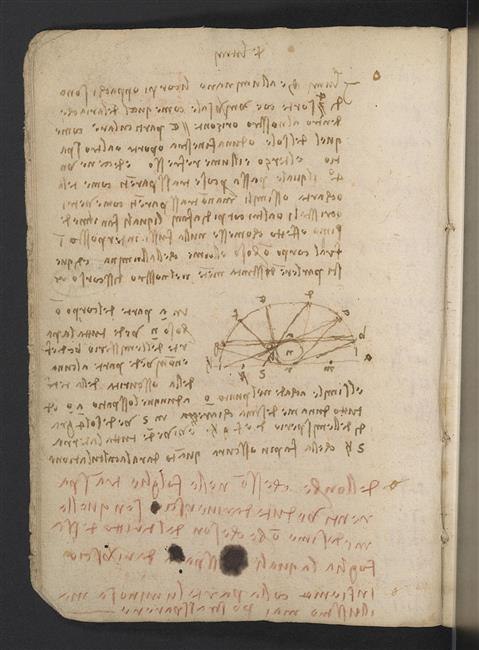
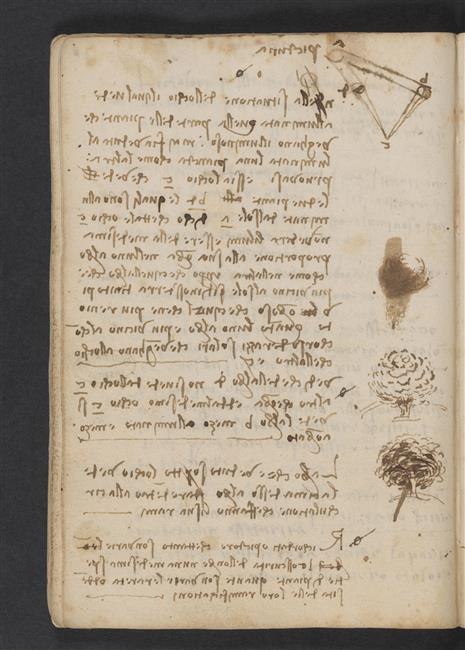
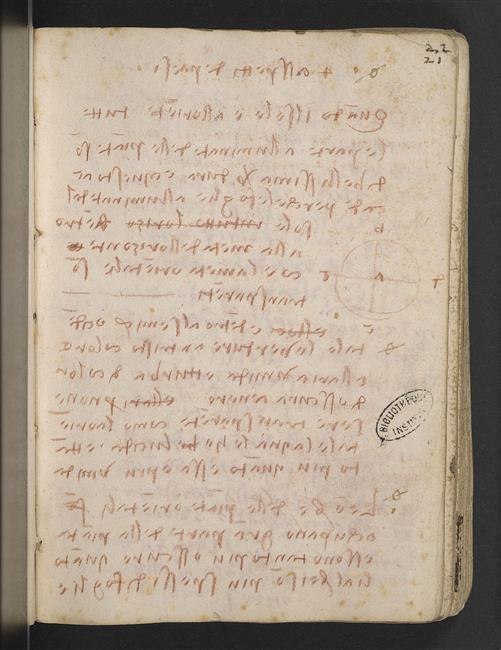
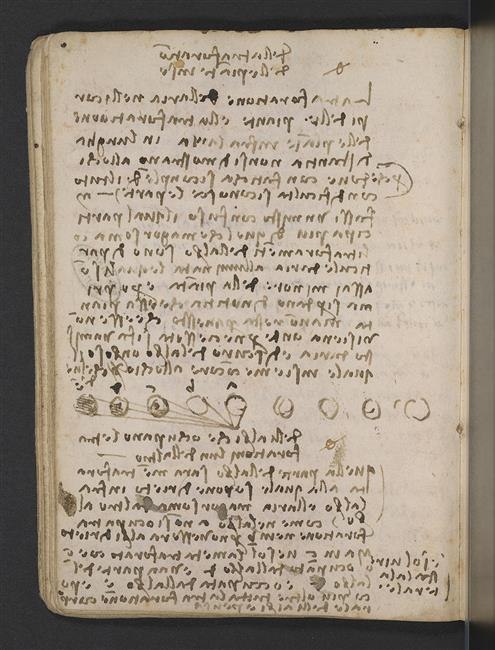
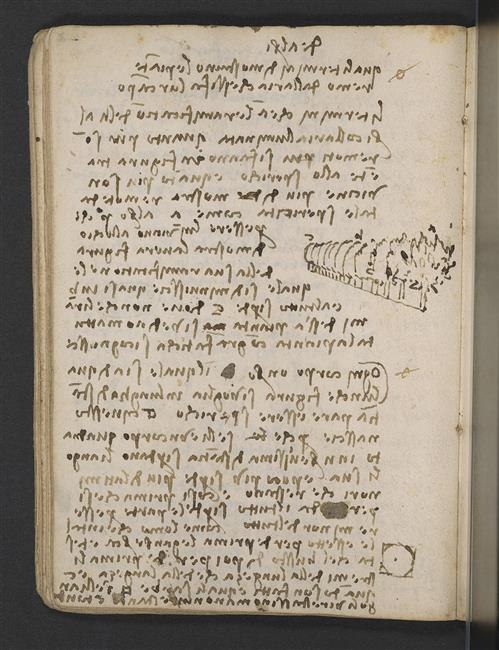
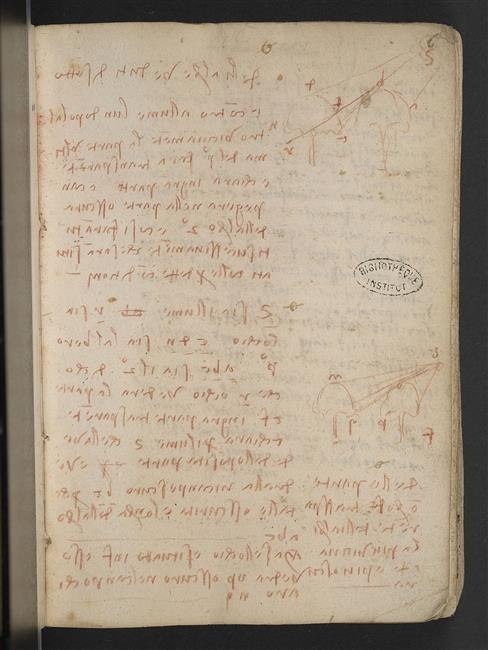
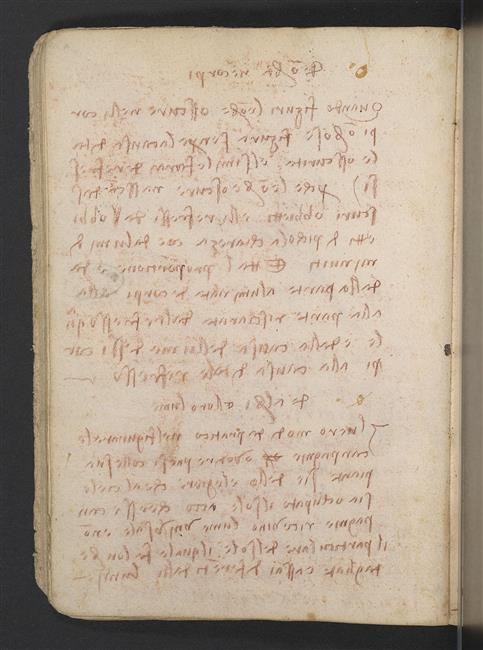
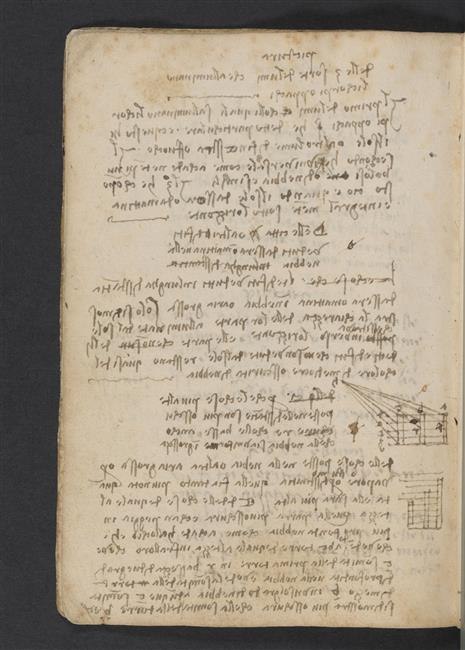
Plate XXVII. Five Drawings, illustrating the Botany for Painters; from the Manuscripts M (1) and G (2 to 5), Institut de France, Paris: No. 1—see text Nos. 395 and 396—; No. 2—see text Nos. 402 and 412—; No. 3—see text No. 413—; No. 4—see text No. 414—; No. 5—see text No. 417
If the plant n grows to the thickness shown at m, its branches will correspond [in thickness] to the junction a b in consequence of the growth inside as well as outside.
The branches of trees or plants have a twist wherever a minor branch is given off; and this giving off the branch forms a fork; this said fork occurs between two angles of which the largest will be that which is on the side of the larger branch, and in proportion, unless accident has spoilt it.
There is no boss on branches which has not been produced by some branch which has failed.
The lower shoots on the branches of trees grow more than the upper ones and this occurs only because the sap that nourishes them, being heavy, tends downwards more than upwards; and again, because those [branches] which grow downwards turn away from the shade which exists towards the centre of the plant. The older the branches are, the greater is the difference between their upper and their lower shoots and in those dating from the same year or epoch.
Manuscript page cited by Richter for this passage: Leonardo, Paris Manuscript G, f. 34v, Bibliothèque de l'Institut de France Source
The beginning of the ramification [the shoot] always has the central line [axis] of its thickness directed to the central line [axis] of the plant itself.
Manuscript page cited by Richter for this passage: Leonardo, Paris Manuscript G, f. 14r, Bibliothèque de l'Institut de France Source
Why, Very Frequently, Timber Has Veins That Are Not Straight
When the branches which grow the second year above the branch of the preceding year, are not of equal thickness above the antecedent branches, but are on one side, then the vigour of the lower branch is diverted to nourish the one above it, although it may be somewhat on one side.
But if the ramifications are equal in their growth, the veins of the main stem will be straight [parallel] and equidistant at every degree of the height of the plant.
Wherefore, O Painter! you, who do not know these laws! in order to escape the blame of those who understand them, it will be well that you should represent every thing from nature, and not despise such study as those do who work [only] for money.
Manuscript page cited by Richter for this passage: Leonardo, Paris Manuscript G, f. 33r, Bibliothèque de l'Institut de France Source
The plants which spread very much have the angles of the spaces which divide their branches more obtuse in proportion as their point of origin is lower down; that is nearer to the thickest and oldest portion of the tree. Therefore in the youngest portions of the tree the angles of ramification are more acute.
Manuscript page cited by Richter for this passage: Leonardo, Paris Manuscript E, f. 6v, Bibliothèque de l'Institut de France Source
The tips of the boughs of plants [and trees], unless they are borne down by the weight of their fruits, turn towards the sky as much as possible.
The upper side of their leaves is turned towards the sky that it may receive the nourishment of the dew which falls at night.
The sun gives spirit and life to plants and the earth nourishes them with moisture. With regard to this I made the experiment of leaving only one small root on a gourd and this I kept nourished with water, and the gourd brought to perfection all the fruits it could produce, which were about 60 gourds of the long kind, and I set my mind diligently [to consider] this vitality and perceived that the dews of night were what supplied it abundantly with moisture through the insertion of its large leaves and gave nourishment to the plant and its offspring—or the seeds which its offspring had to produce—.
The rule of the leaves produced on the last shoot of the year will be that they will grow in a contrary direction on the twin branches; that is, that the insertion of the leaves turns round each branch in such a way, as that the sixth leaf above is produced over the sixth leaf below, and the way they turn is that if one turns towards its companion to the right, the other turns to the left, the leaf serving as the nourishing breast for the shoot or fruit which grows the following year.
Manuscript page cited by Richter for this passage: Leonardo, Paris Manuscript G, f. 32v, Bibliothèque de l'Institut de France Source
The lowest branches of those trees which have large leaves and heavy fruits, such as nut-trees, fig-trees and the like, always droop towards the ground.
The branches always originate above [in the axis of] the leaves.
Manuscript page cited by Richter for this passage: Leonardo, Paris Manuscript G, f. 5r, Bibliothèque de l'Institut de France Source
The lowest branches, after they have formed the angle of their separation from the parent stem, always bend downwards so as not to crowd against the other branches which follow them on the same stem and to be better able to take the air which nourishes them. As is shown by the angle b a c; the branch a c after it has made the corner of the angle a c bends downwards to c d and the lesser shoot c dries up, being too thin.
The main branch always goes below, as is shown by the branch f n m, which does not go to f n o.
Manuscript page cited by Richter for this passage: Leonardo, Paris Manuscript G, f. 35v, Bibliothèque de l'Institut de France Source
The elm always gives a greater length to the last branches of the year's growth than to the lower ones; and Nature does this because the highest branches are those which have to add to the size of the tree; and those at the bottom must get dry because they grow in the shade and their growth would be an impediment to the entrance of the solar rays and the air among the main branches of the tree.
The main branches of the lower part bend down more than those above, so as to be more oblique than those upper ones, and also because they are larger and older.
Manuscript page cited by Richter for this passage: Leonardo, Paris Manuscript G, f. 36r, Bibliothèque de l'Institut de France Source
In general almost all the upright portions of trees curve somewhat turning the convexity towards the South; and their branches are longer and thicker and more abundant towards the South than towards the North. And this occurs because the sun draws the sap towards that surface of the tree which is nearest to it.
And this may be observed if the sun is not screened off by other plants.
Manuscript page cited by Richter for this passage: Leonardo, Paris Manuscript G, f. 36v, Bibliothèque de l'Institut de France Source
The cherry-tree is of the character of the fir tree as regards its ramification placed in stages round its main stem; and its branches spring, 4 or five or 6 [together] opposite each other; and the tips of the topmost shoots form a pyramid from the middle upwards; and the walnut and oak form a hemisphere from the middle upwards.
Manuscript page cited by Richter for this passage: Leonardo, Paris Manuscript G, f. 51r, Bibliothèque de l'Institut de France Source
Such as the growth of the ramification of plants is on their principal branches, so is that of the leaves on the shoots of the same plant. These leaves have four modes of growing one above another. The first, which is the most general, is that the sixth always originates over the sixth below; the second is that two third ones above are over the two third ones below; and the third way is that the third above is over the third below.
Manuscript page cited by Richter for this passage: Leonardo, Paris Manuscript G, f. 33r, Bibliothèque de l'Institut de France Source
The ramification of the elm has the largest branch at the top. The first and the last but one are smaller, when the main trunk is straight.
The space between the insertion of one leaf to the rest is half the extreme length of the leaf or somewhat less, for the leaves are at an interval which is about the 3rd of the width of the leaf.
The elm has more leaves near the top of the boughs than at the base; and the broad [surface] of the leaves varies little as to [angle and] aspect.
Manuscript page cited by Richter for this passage: Leonardo, Paris Manuscript G, f. 27r, Bibliothèque de l'Institut de France Source
In the walnut tree the leaves which are distributed on the shoots of this year are further apart from each other and more numerous in proportion as the branch from which this shoot springs is a young one. And they are inserted more closely and less in number when the shoot that bears them springs from an old branch. Its fruits are borne at the ends of the shoots. And its largest boughs are the lowest on the boughs they spring from. And this arises from the weight of its sap which is more apt to descend than to rise, and consequently the branches which spring from them and rise towards the sky are small and slender; and when the shoot turns towards the sky its leaves spread out from it [at an angle] with an equal distribution of their tips; and if the shoot turns to the horizon the leaves lie flat; and this arises from the fact that leaves without exception, turn their underside to the earth.
The shoots are smaller in proportion as they spring nearer to the base of the bough they spring from.
Manuscript page cited by Richter for this passage: Leonardo, Paris Manuscript G, f. 28r, Bibliothèque de l'Institut de France Source
The thickness of a branch never diminishes within the space between one leaf and the next excepting by so much as the thickness of the bud which is above the leaf and this thickness is taken off from the branch above [the node] as far as the next leaf.
Nature has so placed the leaves of the latest shoots of many plants that the sixth leaf is always above the first, and so on in succession, if the rule is not [accidentally] interfered with; and this occurs for two useful ends in the plant: First that as the shoot and the fruit of the following year spring from the bud or eye which lies above and in close contact with the insertion of the leaf [in the axil], the water which falls upon the shoot can run down to nourish the bud, by the drop being caught in the hollow [axil] at the insertion of the leaf. And the second advantage is, that as these shoots develop in the following year one will not cover the next below, since the 5 come forth on five different sides; and the sixth which is above the first is at some distance.
Manuscript page cited by Richter for this passage: Leonardo, Paris Manuscript G, f. 16v, Bibliothèque de l'Institut de France Source
The ramifications of any tree, such as the elm, are wide and slender after the manner of a hand with spread fingers, foreshortened. And these are seen in the distribution [thus]: the lower portions are seen from above; and those that are above are seen from below; and those in the middle, some from below and some from above. The upper part is the extreme [top] of this ramification and the middle portion is more foreshortened than any other of those which are turned with their tips towards you. And of those parts of the middle of the height of the tree, the longest will be towards the top of the tree and will produce a ramification like the foliage of the common willow, which grows on the banks of rivers.
Other ramifications are spherical, as those of such trees as put forth their shoots and leaves in the order of the sixth being placed above the first. Others are thin and light like the willow and others.
Manuscript page cited by Richter for this passage: Leonardo, Paris Manuscript G, f. 30v, Bibliothèque de l'Institut de France Source
You will see in the lower branches of the elder, which puts forth leaves two and two placed crosswise [at right angles] one above another, that if the stem rises straight up towards the sky this order never fails; and its largest leaves are on the thickest part of the stem and the smallest on the slenderest part, that is towards the top. But, to return to the lower branches, I say that the leaves on these are placed on them crosswise like [those on] the upper branches; and as, by the law of all leaves, they are compelled to turn their upper surface towards the sky to catch the dew at night, it is necessary that those so placed should twist round and no longer form a cross.
Manuscript page cited by Richter for this passage: Leonardo, Paris Manuscript G, f. 29r, Bibliothèque de l'Institut de France Source
A leaf always turns its upper side towards the sky so that it may the better receive, on all its surface, the dew which drops gently from the atmosphere. And these leaves are so distributed on the plant as that one shall cover the other as little as possible, but shall lie alternately one above another as may be seen in the ivy which covers the walls. And this alternation serves two ends; that is, to leave intervals by which the air and sun may penetrate between them. The 2nd reason is that the drops which fall from the first leaf may fall onto the fourth or—in other trees—onto the sixth.
Manuscript page cited by Richter for this passage: Leonardo, Paris Manuscript G, f. 27r, Bibliothèque de l'Institut de France Source
Every shoot and every fruit is produced above the insertion [in the axil] of its leaf which serves it as a mother, giving it water from the rain and moisture from the dew which falls at night from above, and often it protects them against the too great heat of the rays of the sun.
Manuscript page cited by Richter for this passage: Leonardo, Paris Manuscript G, f. 33v, Bibliothèque de l'Institut de France Source
Young plants have more transparent leaves and a more lustrous bark than old ones; and particularly the walnut is lighter coloured in May than in September.
Manuscript page cited by Richter for this passage: Leonardo, Paris Manuscript G, f. 8r, Bibliothèque de l'Institut de France Source
The accidents of colour in the foliage of trees are 4. That is: shadow, light, lustre [reflected light] and transparency.
OF THE VISIBILITY OF THESE ACCIDENTS.
These accidents of colour in the foliage of trees become confused at a great distance and that which has most breadth [whether light or shade, &c.] will be most conspicuous.
Manuscript page cited by Richter for this passage: Leonardo, Paris Manuscript G, f. 24r, Bibliothèque de l'Institut de France Source
G. 24a
The proportions of light and shade in a leaf (423-426)
Sometimes a leaf has three accidents [of light] that is: shade, lustre [reflected light] and transparency [transmitted light]. Thus, if the light were at n as regards the leaf s, and the eye at m, it would see a in full light, b in shadow and c transparent.
Manuscript page cited by Richter for this passage: Leonardo, Paris Manuscript G, f. 10r, Bibliothèque de l'Institut de France Source
A leaf with a concave surface seen from the under side and up-side-down will sometimes show itself as half in shade, and half transparent. Thus, if o p is the leaf and the light m and the eye n, this will see o in shadow because the light does not fall upon it between equal angles, neither on the upper nor the under side, and p is lighted on the upper side and the light is transmitted to its under side.
Manuscript page cited by Richter for this passage: Leonardo, Paris Manuscript G, f. 10v, Bibliothèque de l'Institut de France Source
Although those leaves which have a polished surface are to a great extent of the same colour on the right side and on the reverse, it may happen that the side which is turned towards the atmosphere will have something of the colour of the atmosphere; and it will seem to have more of this colour of the atmosphere in proportion as the eye is nearer to it and sees it more foreshortened. And, without exception the shadows show as darker on the upper side than on the lower, from the contrast offered by the high lights which limit the shadows.
The under side of the leaf, although its colour may be in itself the same as that of the upper side, shows a still finer colour—a colour that is green verging on yellow—and this happens when the leaf is placed between
Manuscript page cited by Richter for this passage: Leonardo, Paris Manuscript G, f. 3r, Bibliothèque de l'Institut de France Source
the eye and the light which falls upon it from the opposite side.
And its shadows are in the same positions as those were of the opposite side. Therefore, O Painter! when you do trees close at hand, remember that if the eye is almost under the tree you will see its leaves [some] on the upper and [some] on the under side, and the upper side will be bluer in proportion as they are seen more foreshortened, and the same leaf sometimes shows part of the right side and part of the under side, whence you must make it of two colours.
Manuscript page cited by Richter for this passage: Leonardo, Paris Manuscript G, f. 2v, Bibliothèque de l'Institut de France Source
The shadows in transparent leaves seen from the under side are the same shadows as there are on the right side of this leaf, they will show through to the underside together with lights, but the lustre [reflected light] can never show through.
Manuscript page cited by Richter for this passage: Leonardo, Paris Manuscript G, f. 3v, Bibliothèque de l'Institut de France Source
When one green has another [green] behind it, the lustre on the leaves and their transparent [lights] show more strongly than in those which are [seen] against the brightness of the atmosphere.
And if the sun illuminates the leaves without their coming between it and the eye and without the eye facing the sun, then the reflected lights and the transparent lights are very strong.
It is very effective to show some branches which are low down and dark and so set off the illuminated greens which are at some distance from the dark greens seen below. That part is darkest which is nearest to the eye or which is farthest from the luminous atmosphere.
Manuscript page cited by Richter for this passage: Leonardo, Paris Manuscript G, f. 4r, Bibliothèque de l'Institut de France Source
Never paint leaves transparent to the sun, because they are confused; and this is because on the transparency of one leaf will be seen the shadow of another leaf which is above it. This shadow has a distinct outline and a certain depth of shade and sometimes is [as much as] half or a third of the leaf which is shaded; and consequently such an arrangement is very confused and the imitation of it should be avoided.
The light shines least through a leaf when it falls upon it at an acute angle.
Manuscript page cited by Richter for this passage: Leonardo, Paris Manuscript G, f. 4v, Bibliothèque de l'Institut de France Source
G. 4b
The gradations of shade and colour in leaves (430-434)
If the light comes from m and the eye is at n the eye will see the colour of the leaves a b all affected by the colour of m —that is of the atmosphere; and b c will be seen from the under side as transparent, with a beautiful green colour verging on yellow.
If m is the luminous body lighting up the leaf s all the eyes that see the under side of this leaf will see it of a beautiful light green, being transparent.
In very many cases the positions of the leaves will be without shadow [or in full light], and their under side will be transparent and the right side lustrous [reflecting light].
Manuscript page cited by Richter for this passage: Leonardo, Paris Manuscript G, f. 8v, Bibliothèque de l'Institut de France Source
The willow and other similar trees, which have their boughs lopped every 3 or 4 years, put forth very straight branches, and their shadow is about the middle where these boughs spring; and towards the extreme ends they cast but little shade from having small leaves and few and slender branches. Hence the boughs which rise towards the sky will have but little shade and little relief; and the branches which are at an angle from the horizon, downwards, spring from the dark part of the shadow and grow thinner by degrees up to their ends, and these will be in strong relief, being in gradations of light against a background of shadow.
That tree will have the least shadow which has the fewest branches and few leaves.
Manuscript page cited by Richter for this passage: Leonardo, Paris Manuscript G, f. 9r, Bibliothèque de l'Institut de France Source
When the leaves are interposed between the light and the eye, then that which is nearest to the eye will be the darkest, and the most distant will be the lightest, not being seen against the atmosphere; and this is seen in the leaves which are away from the centre of the tree, that is towards the light.
Manuscript page cited by Richter for this passage: Leonardo, Paris Manuscript G, f. 10v, Bibliothèque de l'Institut de France Source
The lights on such leaves which are darkest, will be most near to the colour of the atmosphere that is reflected in them. And the cause of this is that the light on the illuminated portion mingles with the dark hue to compose a blue colour; and this light is produced by the blueness of the atmosphere which is reflected in the smooth surface of these leaves and adds to the blue hue which this light usually produces when it falls on dark objects.
OF THE LIGHTS ON LEAVES OF A YELLOWISH GREEN.
But leaves of a green verging on yellow when they reflect the atmosphere do not produce a reflection verging on blue, inasmuch as every thing which appears in a mirror takes some colour from that mirror, hence the blue of the atmosphere being reflected in the yellow of the leaf appears green, because blue and yellow mixed together make a very fine green colour, therefore the lustre of light leaves verging on yellow will be greenish yellow.
Manuscript page cited by Richter for this passage: Leonardo, Paris Manuscript G, f. 28v, Bibliothèque de l'Institut de France Source
The trees in a landscape are of various kinds of green, inasmuch as some verge towards blackness, as firs, pines, cypresses, laurels, box and the like. Some tend to yellow such as walnuts, and pears, vines and verdure. Some are both yellowish and dark as chesnuts, holm-oak. Some turn red in autumn as the service-tree, pomegranate, vine, and cherry; and some are whitish as the willow, olive, reeds and the like. Trees are of various forms ...
Of a Generally Distributed Light As Lighting Up Trees
That part of the trees will be seen to lie in the least dark shadow which is farthest from the earth.
To prove it let a p be the tree, n b c the illuminated hemisphere [the sky], the under portion of the tree faces the earth p c, that is on the side o, and it faces a small part of the hemisphere at c d. But the highest part of the convexity a faces the greatest part of the hemisphere, that is b c. For this reason—and because it does not face the darkness of the earth—it is in fuller light. But if the tree has dense foliage, as the laurel, arbutus, box or holm oak, it will be different; because, although a does not face the earth, it faces the dark [green] of the leaves cut up by many shadows, and this darkness is reflected onto the under sides of the leaves immediately above. Thus these trees have their darkest shadows nearest to the middle of the tree.
Manuscript page cited by Richter for this passage: Leonardo, Paris Manuscript G, f. 12r, Bibliothèque de l'Institut de France Source
The shadows of verdure are always somewhat blue, and so is every shadow of every object; and they assume this hue more in proportion as they are remote from the eye, and less in proportion as they are nearer. The leaves which reflect the blue of the atmosphere always present themselves to the eye edgewise.
OF THE ILLUMINATED PART OF VERDURE AND OF MOUNTAINS.
The illuminated portion, at a great distance, will appear most nearly of its natural colour where the strongest light falls upon it.
Manuscript page cited by Richter for this passage: Leonardo, Paris Manuscript G, f. 15r, Bibliothèque de l'Institut de France Source
Of Trees That Are Lighted by the Sun and by the Atmosphere
In trees that are illuminated [both] by the sun and the atmosphere and that have leaves of a dark colour, one side will be illuminated by the atmosphere [only] and in consequence of this light will tend to blueness, while on the other side they will be illuminated by the atmosphere and the sun; and the side which the eye sees illuminated by the sun will reflect light.
Manuscript page cited by Richter for this passage: Leonardo, Paris Manuscript G, f. 28v, Bibliothèque de l'Institut de France Source
The trees and plants which are most thickly branched with slender branches ought to have less dark shadow than those trees and plants which, having broader leaves, will cast more shadow.
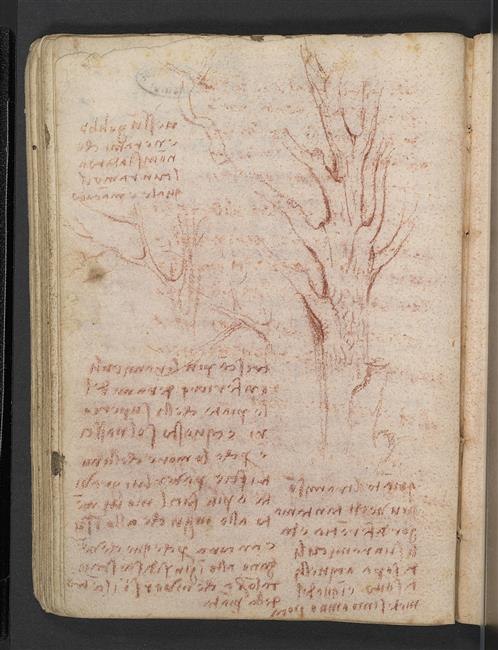
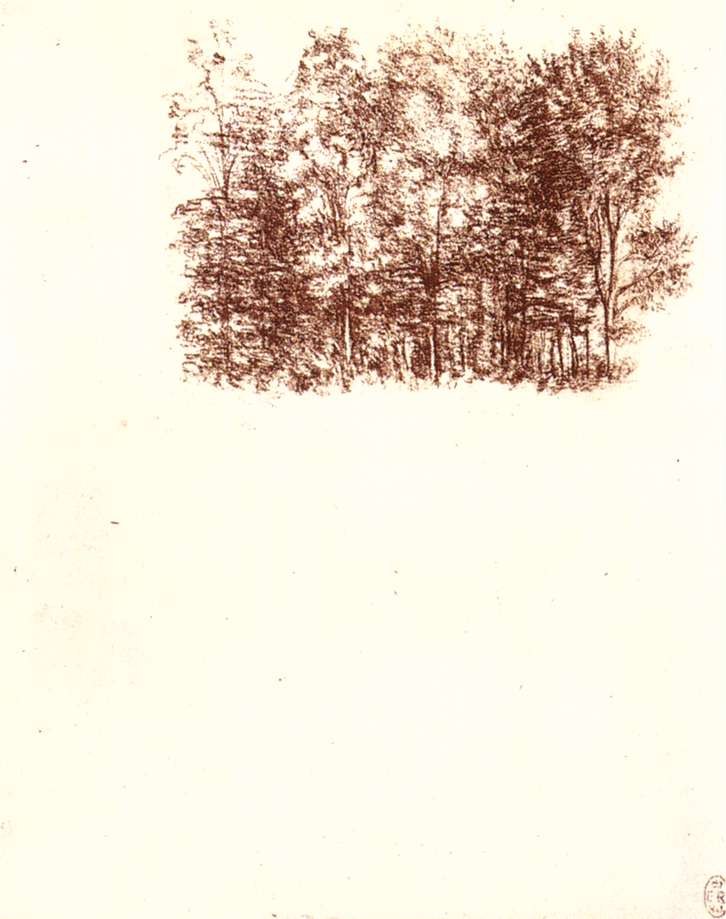
Leonardo, Birch copse, Royal Collection, RCIN 912431 Source
In the position of the eye which sees that portion of a tree illuminated which turns towards the light, one tree will never be seen to be illuminated equally with the other. To prove this, let the eye be c which sees the two trees b d which are illuminated by the sun a; I say that this eye c will not see the light in the same proportion to the shade, in one tree as in the other. Because, the tree which is nearest to the sun will display so much the stronger shadow than the more distant one, in proportion as one tree is nearer to the rays of the sun that converge to the eye than the other; &c.
You see that the eye c sees nothing of the tree d but shadow, while the same eye c sees thè tree b half in light and half in shade.
When a tree is seen from below, the eye sees the top of it as placed within the circle made by its boughs.
Remember, O Painter! that the variety of depth of shade in any one particular species of tree is in proportion to the rarity or density of their branches.
Manuscript page cited by Richter for this passage: Leonardo, Paris Manuscript E, f. 18v, Bibliothèque de l'Institut de France Source
The shadows of trees placed in a landscape do not display themselves in the same position in the trees on the right hand and those on the left; still more so if the sun is to the right or left. As is proved by the 4th which says: Opaque bodies placed between the light and the eye display themselves entirely in shadow; and by the 5th: The eye when placed between the opaque body and the light sees the opaque body entirely illuminated. And by the 6th: When the eye and the opaque body are placed between darkness and light, it will be seen half in shadow and half in light.
Of the plants which take a shadow from the plants which spring among them, those which are on this side [in front] of the shadow have the stems lighted up on a background of shadow, and the plants on which the shadows fall have their stems dark on a light background; that is on the background beyond the shadow.
OF TREES WHICH ARE BETWEEN THE EYE AND THE LIGHT.
Of the trees which are between the eye and the light the part in front will be light; but this light will be broken by the ramifications of transparent leaves—being seen from the under side—and lustrous leaves—being seen from the upper side; and the background below and behind will be dark green, being in shadow from the front portion of the said tree. This occurs in trees placed above the eye.
Manuscript page cited by Richter for this passage: Leonardo, Paris Manuscript G, f. 9v, Bibliothèque de l'Institut de France Source
Landscapes should be represented so that the trees may be half in light and half in shadow; but it is better to do them when the sun is covered with clouds, for then the trees are lighted by the general light of the sky, and the general darkness of the earth. And then they are darkest in certain parts in proportion as those parts are nearest to the middle of the tree and to the earth.
Manuscript page cited by Richter for this passage: Leonardo, Paris Manuscript G, f. 19v, Bibliothèque de l'Institut de France SourceLeonardo, Birch copse, Royal Collection, RCIN 912431 Source
G. 19b
In the Treatise on Painting: chapter 325 (the same passage)
When the sun is in the east the trees to the South and to the North have almost as much light as shadow. But a greater share of light in proportion as they lie to the West and a greater share of shadow in proportion as they lie to the East.
OF MEADOWS.
If the sun is in the East the verdure of the meadows and of other small plants is of a most beautiful green from being transparent to the sun; this does not occur in the meadows to the West, and in those to the South and North the grass is of a moderately brilliant green.
Manuscript page cited by Richter for this passage: Leonardo, Paris Manuscript G, f. 20v, Bibliothèque de l'Institut de France Source
When the sun is in the East all the portions of plants lighted by it are of a most lively verdure, and this happens because the leaves lighted by the sun within the half of the horizon that is the Eastern half, are transparent; and within the Western semicircle the verdure is of a dull hue and the moist air is turbid and of the colour of grey ashes, not being transparent like that in the East, which is quite clear and all the more so in proportion as it is moister.
The shadows of the trees to the East cover a large portion of them and are darker in proportion as the foliage of the trees is thicker.
Manuscript page cited by Richter for this passage: Leonardo, Paris Manuscript G, f. 21r, Bibliothèque de l'Institut de France Source
When the sun is in the East the trees seen towards the East will have the light which surrounds them all round their shadows, excepting on the side towards the earth; unless the tree has been pruned [below] in the past year. And the trees to the South and North will be half in shade and half in light, and more or less in shade or in light in proportion as they are more or less to the East or to the West.
The [position of] the eye above or below varies the shadows and lights in trees, inasmuch as the eye placed above sees the tree with the little shadow, and the eye placed below with a great deal of shadow.
The colour of the green in plants varies as much as their species.
Manuscript page cited by Richter for this passage: Leonardo, Paris Manuscript G, f. 21v, Bibliothèque de l'Institut de France Source
The sun being in the East [to the right], the trees to the West [or left] of the eye will show in small relief and almost imperceptible gradations, because the atmosphere which lies between the eye and those trees is very dense, see the 7th of this—and they have no shade; for though a shadow exists in every detail of the ramification, it results that the images of the shade and light that reach the eye are confused and mingled together and cannot be perceived on account of their minuteness. And the principal lights are in the middle of the trees, and the shadows to wards the edges; and their separation is shown by the shadows of the intervals between the trees; but when the forests are thick with trees the thin edges are but little seen.
Manuscript page cited by Richter for this passage: Leonardo, Paris Manuscript G, f. 22r, Bibliothèque de l'Institut de France Source
Objects in High Light Show But Little, But Between Light and Shadow They Stand Out Well
To represent a landscape choose that the sun shall be at noon and look towards the West or East and then draw. And if you turn towards the North, every object placed on that side will have no shadow, particularly those which are nearest to the [direction of the] shadow of your head. And if you turn towards the South every object on that side will be wholly in shadow. All the trees which are towards the sun and have the atmosphere for their background are dark, and the other trees which lie against that darkness will be black [very dark] in the middle and lighter towards the edges.
L. 87a
The appearance of trees in the distance (450. 451)
Of the Spaces [Showing the Sky] in Trees Themselves
The spaces between the parts in the mass of trees, and the spaces between the trees in the air, are, at great distances, invisible to the eye; for, where it is an effort [even] to see the whole it is most difficult to discern the parts.—But a confused mixture is the result, partaking chiefly of the [hue] which predominates. The spaces between the leaves consist of particles of illuminated air which are very much smaller than the tree and are lost sight of sooner than the tree; but it does not therefore follow that they are not there. Hence, necessarily, a compounded [effect] is produced of the sky and of the shadows of the tree in shade, which both together strike the eye which sees them.
OF TREES WHICH CONCEAL THESE SPACES IN ONE ANOTHER.
That part of a tree will show the fewest spaces, behind which a large number of trees are standing between the tree and the air [sky]; thus in the tree a the spaces are not concealed nor in b, as there is no tree behind. But in c only half shows the spaces filled up by the tree d, and part of the tree d is filled up by the tree e and a little farther on all the spaces in the mass of the trees are lost, and only that at the side remains.
Manuscript page cited by Richter for this passage: Leonardo, Paris Manuscript G, f. 25v, Bibliothèque de l'Institut de France Source
What outlines are seen in trees at a distance against the sky which serves as their background?
The outlines of the ramification of trees, where they lie against the illuminated sky, display a form which more nearly approaches the spherical on proportion as they are remote, and the nearer they are the less they appear in this spherical form; as in the first tree a which, being near to the eye, displays the true form of its ramification; but this shows less in b and is altogether lost in c, where not merely the branches of the tree cannot be seen but the whole tree is distinguished with difficulty. Every object in shadow, of whatever form it may be, at a great distance appears to be spherical. And this occurs because, if it is a square body, at a very short distance it loses its angles, and a little farther off it loses still more of its smaller sides which remain. And thus before the whole is lost [to sight] the parts are lost, being smaller than the whole; as a man, who in such a distant position loses his legs, arms and head before [the mass of] his body, then the outlines of length are lost before those of breadth, and where they have become equal it would be a square if the angles remained; but as they are lost it is round.
Manuscript page cited by Richter for this passage: Leonardo, Paris Manuscript G, f. 26v, Bibliothèque de l'Institut de France Source
All trees seen against the sun are dark towards the middle and this shadow will be of the shape of the tree when apart from others.
The shadows cast by trees on which the sun shines are as dark as those of the middle of the tree.
The shadow cast by a tree is never less than the mass of the tree but becomes taller in proportion as the spot on which it falls, slopes towards the centre of the world.
The shadow will be densest in the middle of the tree when the tree has the fewest branches.
Every branch participates of the central shadow of every other branch and consequently [of that] of the whole tree.
The form of any shadow from a branch or tree is circumscribed by the light which falls from the side whence the light comes; and this illumination gives the shape of the shadow, and this may be of the distance of a mile from the side where the sun is.
If it happens that a cloud should anywhere overshadow some part of a hill the [shadow of the] trees there will change less than in the plains; for these trees on the hills have their branches thicker, because they grow less high each year than in the plains. Therefore as these branches are dark by nature and being so full of shade, the shadow of the clouds cannot darken them any more; but the open spaces between the trees, which have no strong shadow change very much in tone and particularly those which vary from green; that is ploughed lands or fallen mountains or barren lands or rocks. Where the trees are against the atmosphere they appear all the same colour—if indeed they are not very close together or very thickly covered with leaves like the fir and similar trees. When you see the trees from the side from which the sun lights them, you will see them almost all of the same tone, and the shadows in them will be hidden by the leaves in the light, which come between your eye and those shadows.
TREES AT A SHORT DISTANCE.
When the trees are situated between the sun and the eye, beyond the shadow which spreads from their centre, the green of their leaves will be seen transparent; but this transparency will be broken in many places by the leaves and boughs in shadow which will come between you and them, or, in their upper portions, they will be accompanied by many lights reflected from the leaves.
The trees of the landscape stand out but little from each other; because their illuminated portions come against the illuminated portions of those beyond and differ little from them in light and shade.
Of trees seen from below and against the light, one beyond the other and near together. The topmost part of the first will be in great part transparent and light, and will stand out against the dark portion of the second tree. And thus it will be with all in succession that are placed under the same conditions.
Let s be the light, and r the eye, c d n the first tree, a b c the second. Then I say that r, the eye, will see the portion c f in great part transparent and lighted by the light s which falls upon it from the opposite side, and it will see it, on a dark ground b c because that is the dark part and shadow of the tree a b c.
But if the eye is placed at t it will see o p dark on the light background n g.
Of the transparent and shadowy parts of trees, that which is nearest to you is the darkest.
Manuscript page cited by Richter for this passage: Leonardo, Paris Manuscript G, f. 6r, Bibliothèque de l'Institut de France Source
That part of a tree which has shadow for background, is all of one tone, and wherever the trees or branches are thickest they will be darkest, because there are no little intervals of air. But where the boughs lie against a background of other boughs, the brighter parts are seen lightest and the leaves lustrous from the sunlight falling on them.
In the composition of leafy trees be careful not to repeat too often the same colour of one tree against the same colour of another [behind it]; but vary it with a lighter, or a darker, or a stronger green.
Manuscript page cited by Richter for this passage: Leonardo, Paris Manuscript G, f. 27v, Bibliothèque de l'Institut de France Source
The landscape has a finer azure [tone] when, in fine weather the sun is at noon than at any other time of the day, because the air is purified of moisture; and looking at it under that aspect you will see the trees of a beautiful green at the outside and the shadows dark towards the middle; and in the remoter distance the atmosphere which comes between you and them looks more beautiful when there is something dark beyond. And still the azure is most beautiful. The objects seen from the side on which the sun shines will not show you their shadows. But, if you are lower than the sun, you can see what is not seen by the sun and that will be all in shade. The leaves of the trees, which come between you and the sun are of two principal colours which are a splendid lustre of green, and the reflection of the atmosphere which lights up the objects which cannot be seen by the sun, and the shaded portions which only face the earth, and the darkest which are surrounded by something that is not dark. The trees in the landscape which are between you and the sun are far more beautiful than those you see when you are between the sun and them; and this is so because those which face the sun show their leaves as transparent towards the ends of their branches, and those that are not transparent—that is at the ends—reflect the light; and the shadows are dark because they are not concealed by any thing.
The trees, when you place yourself between them and the sun, will only display to you their light and natural colour, which, in itself, is not very strong, and besides this some reflected lights which, being against a background which does not differ very much from themselves in tone, are not conspicuous; and if you are lower down than they are situated, they may also show those portions on which the light of the sun does not fall and these will be dark.
In the Wind.
But, if you are on the side whence the wind blows, you will see the trees look very much lighter than on the other sides, and this happens because the wind turns up the under side of the leaves, which, in all trees, is much whiter than the upper sides; and, more especially, will they be very light indeed if the wind blows from the quarter where the sun is, and if you have your back turned to it.
When the sun is covered by clouds, objects are less conspicuous, because there is little difference between the light and shade of the trees and of the buildings being illuminated by the brightness of the atmosphere which surrounds the objects in such a way that the shadows are few, and these few fade away so that their outline is lost in haze.
The best method of practice in representing country scenes, or I should say landscapes with their trees, is to choose them so that the sun is covered with clouds so that the landscape receives an universal light and not the direct light of the sun, which makes the shadows sharp and too strongly different from the lights.
Manuscript page cited by Richter for this passage: Leonardo, Paris Manuscript G, f. 11v, Bibliothèque de l'Institut de France Source
In landscapes which represent [a scene in] winter. The mountains should not be shown blue, as we see in the mountains in the summer. And this is proved in the 4th of this which says: Among mountains seen from a great distance those will look of the bluest colour which are in themselves the darkest; hence, when the trees are stripped of their leaves, they will show a bluer tinge which will be in itself darker; therefore, when the trees have lost their leaves they will look of a gray colour, while, with their leaves, they are green, and in proportion as the green is darker than the grey hue the green will be of a bluer tinge than the gray. Also by the 2nd of this: The shadows of trees covered with leaves are darker than the shadows of those trees which have lost their leaves in proportion as the trees covered with leaves are denser than those without leaves—and thus my meaning is proved.
The definition of the blue colour of the atmosphere explains why the landscape is bluer in the summer than in the winter.
If the slope of a hill comes between the eye and the horizon, sloping towards the eye, while the eye is opposite the middle of the height of this slope, then that hill will increase in darkness throughout its length. This is proved by the 7th of this which says that a tree looks darkest when it is seen from below; the proposition is verified, since this hill will, on its upper half show all its trees as much from the side which is lighted by the light of the sky, as from that which is in shade from the darkness of the earth; whence it must result that these trees are of a medium darkness. And from this [middle] spot towards the base of the hill, these trees will be lighter by degrees by the converse of the 7th and by the said 7th: For trees so placed, the nearer they are to the summit of the hill the darker they necessarily become. But this darkness is not in proportion to the distance, by the 8th of this which says: That object shows darkest which is [seen] in the clearest atmosphere; and by the 10th: That shows darkest which stands out against a lighter background.
The colours of the shadows in mountains at a great distance take a most lovely blue, much purer than their illuminated portions. And from this it follows that when the rock of a mountain is reddish the illuminated portions are violet (?) and the more they are lighted the more they display their proper colour.
When the sun is in the East and the eye is above the centre of a town, the eye will see the Southern part of the town with its roofs half in shade and half in light, and the same towards the North; the Eastern side will be all in shadow and the Western will be all in light.
Manuscript page cited by Richter for this passage: Leonardo, Paris Manuscript G, f. 19v, Bibliothèque de l'Institut de France Source
Of the houses of a town, in which the divisions between the houses may be distinguished by the light which fall on the mist at the bottom. If the eye is above the houses the light seen in the space that is between one house and the next sinks by degrees into thicker mist; and yet, being less transparent, it appears whiter; and if the houses are some higher than the others, since the true [colour] is always more discernible through the thinner atmosphere, the houses will look darker in proportion as they are higher up. Let n o p q represent the various density of the atmosphere thick with moisture, a being the eye, the house b c will look lightest at the bottom, because it is in a thicker atmosphere; the lines c d f will appear equally light, for although f is more distant than c, it is raised into a thinner atmosphere, if the houses b e are of the same height, because they cross a brightness which is varied by mist, but this is only because the line of the eye which starts from above ends by piercing a lower and denser atmosphere at d than at b. Thus the line a f is lower at f than at c; and the house f will be seen darker at e from the line e k as far as m, than the tops of the houses standing in front of it.
Of Towns or Other Buildings Seen in the Evening or the Morning Through the Mist
Of buildings seen at a great distance in the evening or the morning, as in mist or dense atmosphere, only those portions are seen in brightness which are lighted up by the sun which is near the horizon; and those portions which are not lighted up by the sun remain almost of the same colour and medium tone as the mist.
WHY OBJECTS WHICH ARE HIGH UP AND AT A DISTANCE ARE DARKER THAN THE LOWER ONES, EVEN IF THE MIST IS UNIFORMLY DENSE.
Of objects standing in a mist or other dense atmosphere, whether from vapour or smoke or distance, those will be most visible which are the highest. And among objects of equal height that will be the darkest [strongest] which has for background the deepest mist. Thus the eye h looking at a b c, towers of equal height, one with another, sees c the top of the first tower at r, at two degrees of depth in the mist; and sees the height of the middle tower b through one single degree of mist. Therefore the top of the tower c appears stronger than the top of the tower b, &c.
Manuscript page cited by Richter for this passage: Leonardo, Paris Manuscript E, f. 3v, Bibliothèque de l'Institut de France Source
E. 3b
In the Treatise on Painting: chapter 317 (the same passage), chapter 319 (the same passage)
Smoke is seen better and more distinctly on the Eastern side than on the Western when the sun is in the East; and this arises from two causes; the first is that the sun, with its rays, shines through the particles of the smoke and lights them up and makes them visible. The second is that the roofs of the houses seen in the East at this time are in shadow, because their obliquity does not allow of their being illuminated by the sun. And the same thing occurs with dust; and both one and the other look the lighter in proportion as they are denser, and they are densest towards the middle.
Manuscript page cited by Richter for this passage: Leonardo, Paris Manuscript G, f. 22v, Bibliothèque de l'Institut de France Source
If the sun is in the East the smoke of cities will not be visible in the West, because on that side it is not seen penetrated by the solar rays, nor on a dark background; since the roofs of the houses turn the same side to the eye as they turn towards the sun, and on this light background the smoke is not very visible.
But dust, under the same aspect, will look darker than smoke being of denser material than smoke which is moist.
Manuscript page cited by Richter for this passage: Leonardo, Paris Manuscript G, f. 23r, Bibliothèque de l'Institut de France Source
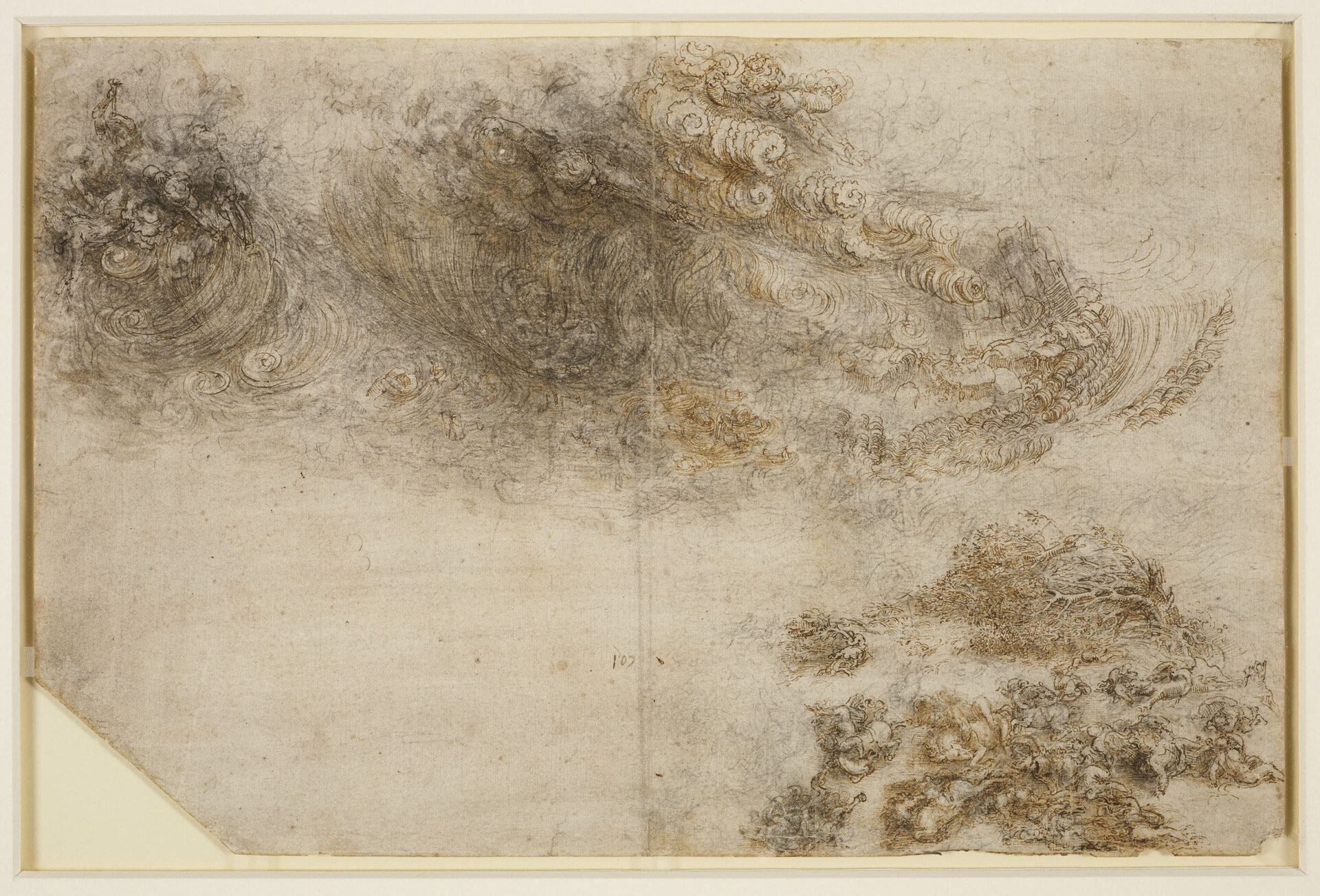
In representing wind, besides the bending of the boughs and the reversing of their leaves towards the quarter whence the wind comes, you should also represent them amid clouds of fine dust mingled with the troubled air.
Manuscript page cited by Richter for this passage: Leonardo, Paris Manuscript E, f. 6v, Bibliothèque de l'Institut de France SourceLeonardo, A tempest, Royal Collection, RCIN 912376 Source
E. 6b
In the Treatise on Painting: chapter 337 (the same passage)
Describe landscapes with the wind, and the water, and the setting and rising of the sun.
THE WIND.
All the leaves which hung towards the earth by the bending of the shoots with their branches, are turned up side down by the gusts of wind, and here their perspective is reversed; for, if the tree is between you and the quarter of the wind, the leaves which are towards you remain in their natural aspect, while those on the opposite side which ought to have their points in a contrary direction have, by being turned over, their points turned towards you.
Leonardo, A tempest, Royal Collection, RCIN 912376 Source
Trees struck by the force of the wind bend to the side towards which the wind is blowing; and the wind being past they bend in the contrary direction, that is in reverse motion.
Leonardo, A tempest, Royal Collection, RCIN 912376 Source
That portion of a tree which is farthest from the force which strikes it is the most injured by the blow because it bears most strain; thus nature has foreseen this case by thickening them in that part where they can be most hurt; and most in such trees as grow to great heights, as pines and the like.
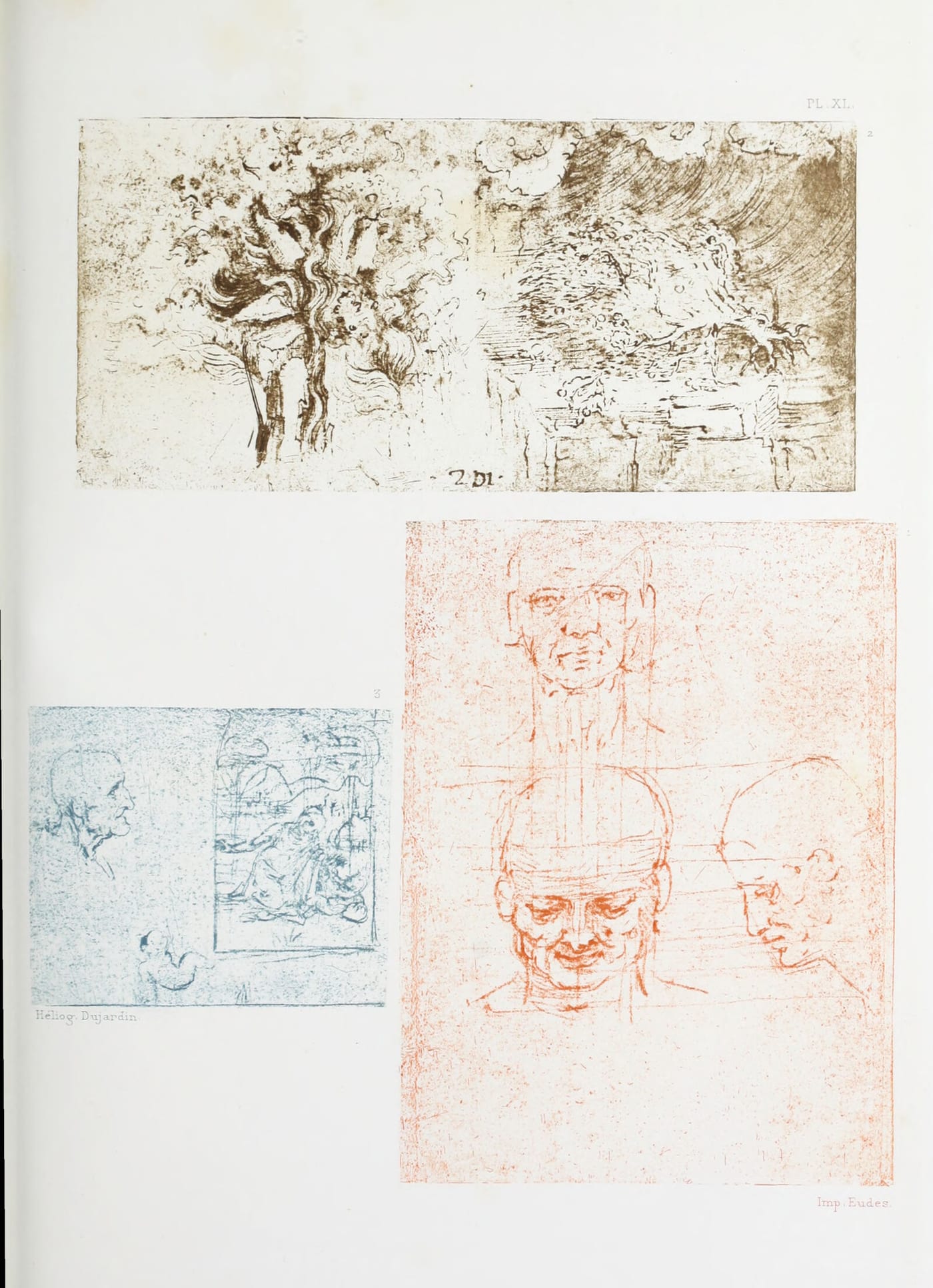
Plate XL. Three Drawings from the Royal Library, Windsor Castle: No. 1 Representations of Natural Phenomena, drawn with the pen and washed with Indian ink—see text Nos. 473, 608—610—; No. 2 Sketches of Male Heads in red chalk, illustrating the practice of Figure Painting—see text No. 573—; No. 3 Sketch for a Madonna picture, drawn with the silverpoint on bluish-tinted paper—see text page 343, note
The shadows in clouds are lighter in proportion as they are nearer to the horizon.
W. VI
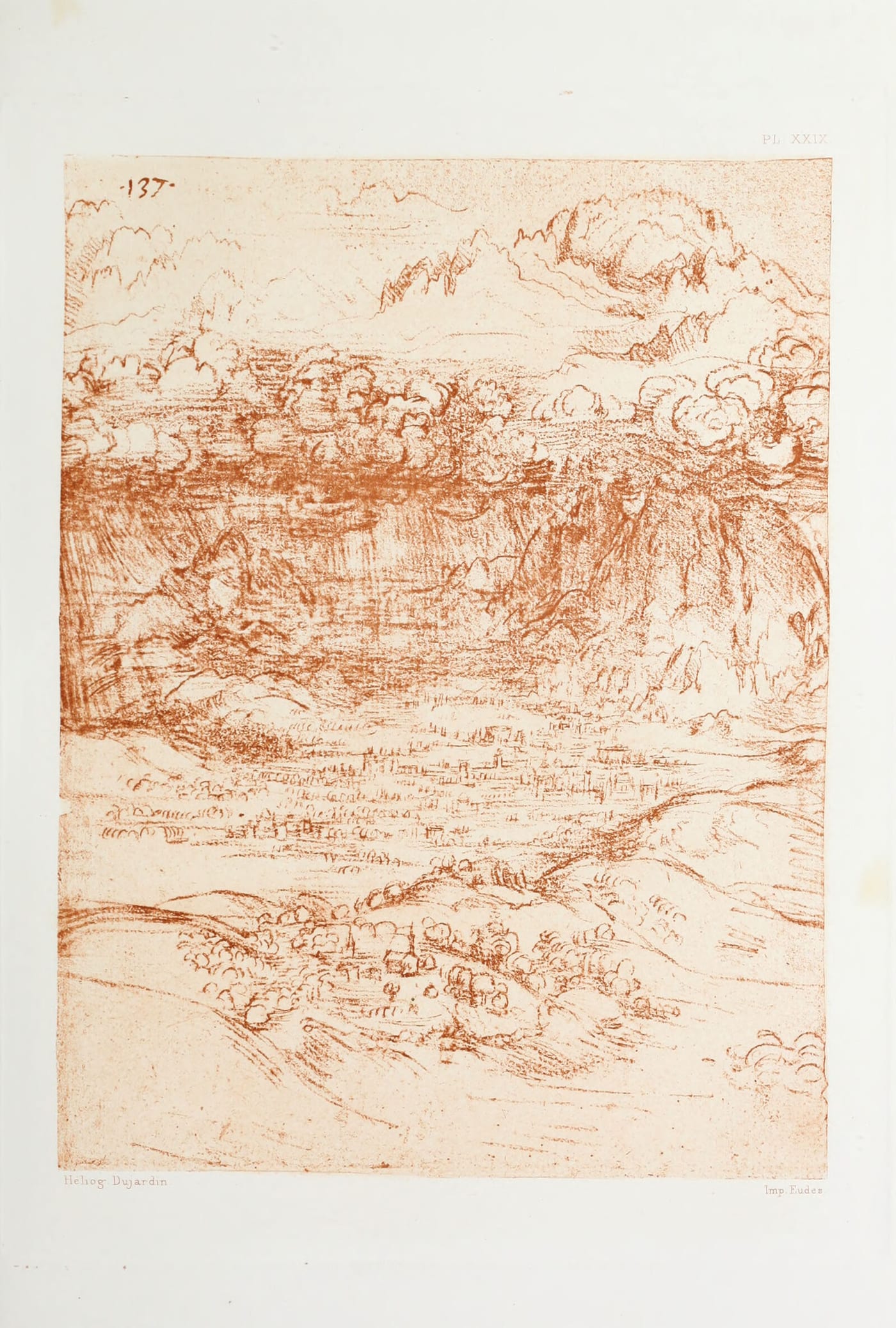
§ 476Plate XXIX. Drawing, in red chalk, representing a Landscape; from the Royal Library, Windsor Castle—see text No. 476
When clouds come between the sun and the eye all the upper edges of their round forms are light, and towards the middle they are dark, and this happens because towards the top these edges have the sun above them while you are below them; and the same thing happens with the position of the branches of trees; and again the clouds, like the trees, being somewhat transparent, are lighted up in part, and at the edges they show thinner.
But, when the eye is between the cloud and the sun, the cloud has the contrary effect to the former, for the edges of its mass are dark and it is light towards the middle; and this happens because you see the same side as faces the sun, and because the edges have some transparency and reveal to the eye that portion which is hidden beyond them, and which, as it does not catch the sunlight like that portion turned towards it, is necessarily somewhat darker. Again, it may be that you see the details of these rounded masses from the lower side, while the sun shines on the upper side and as they are not so situated as to reflect the light of the sun, as in the first instance they remain dark.
The black clouds which are often seen higher up than those which are illuminated by the sun are shaded by other clouds, lying between them and the sun.
Again, the rounded forms of the clouds that face the sun, show their edges dark because they lie against the light background; and to see that this is true, you may look at the top of any cloud that is wholly light because it lies against the blue of the atmosphere, which is darker than the cloud.
Of Clouds, Smoke and Dust and the Flames of a Furnace or of a Burning Kiln
The clouds do not show their rounded forms excepting on the sides which face the sun; on the others the roundness is imperceptible because they are in the shade.
If the sun is in the East and the clouds in the West, the eye placed between the sun and the clouds sees the edges of the rounded forms composing these clouds as dark, and the portions which are surrounded by this dark [edge] are light. And this occurs because the edges of the rounded forms of these clouds are turned towards the upper or lateral sky, which is reflected in them.
Both the cloud and the tree display no roundness at all on their shaded side.
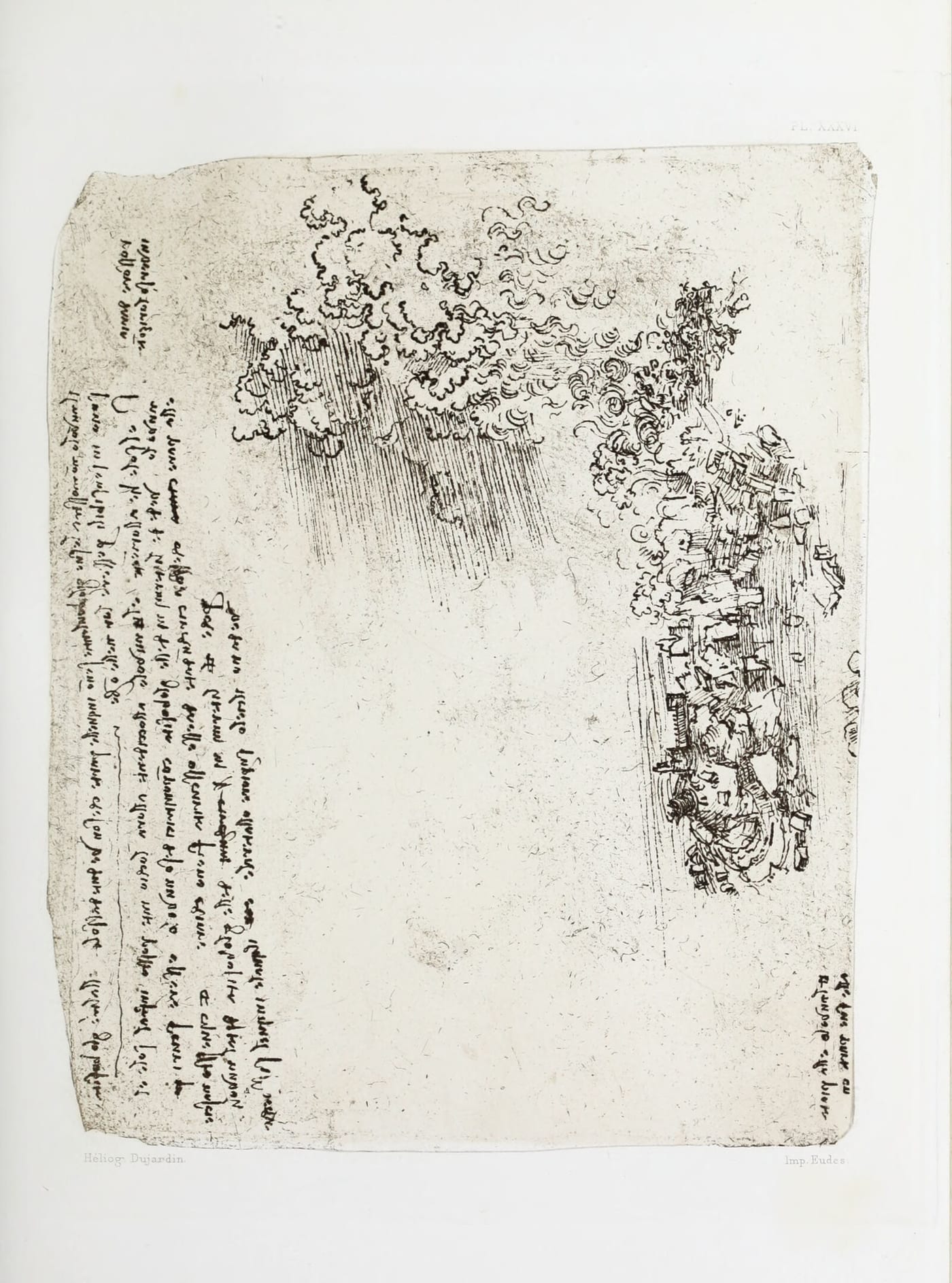
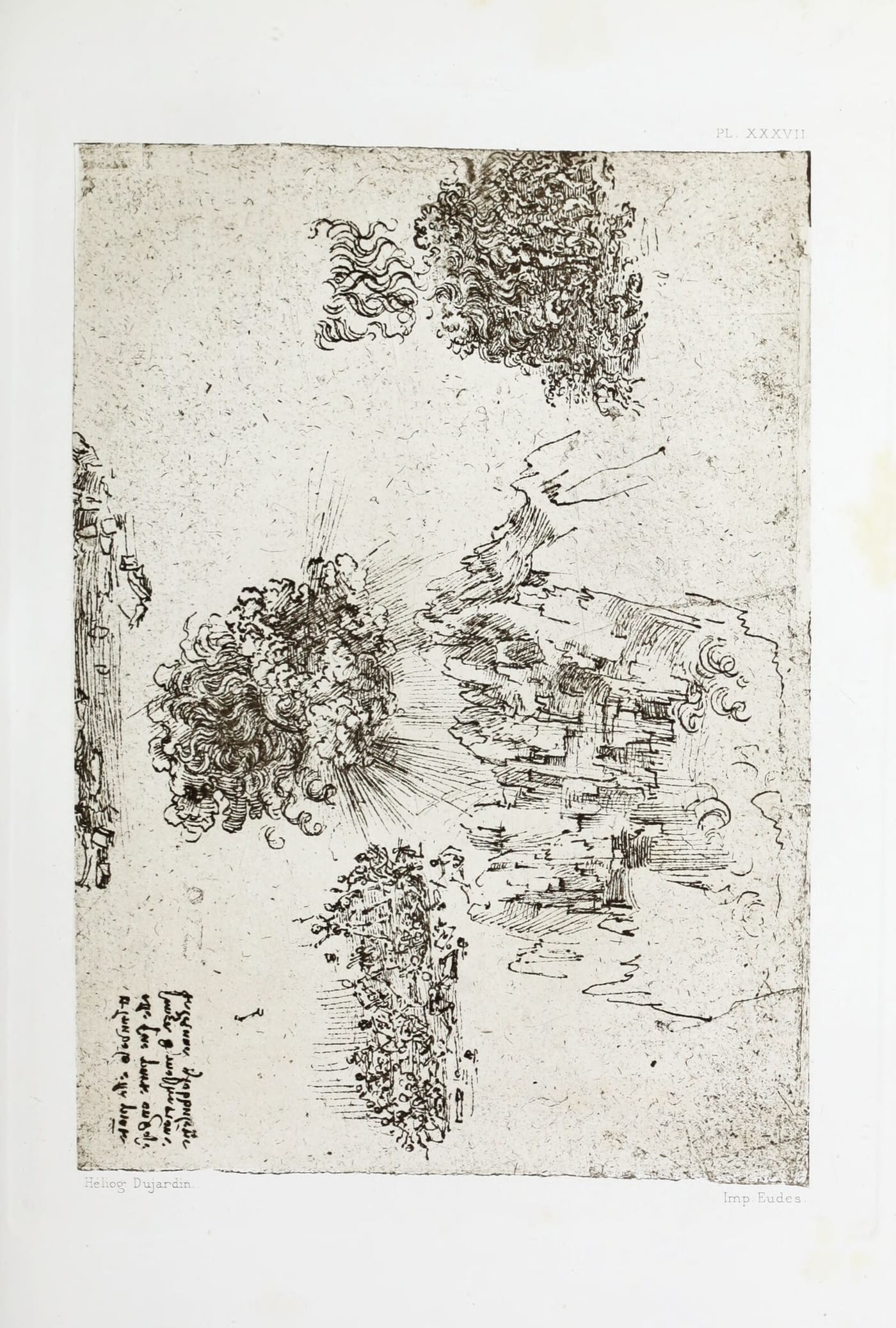
Plate XXXVI. Representation of Natural Phenomena; from the Royal Library, Windsor Castle—see text p. 307, note, and No. 477Plate XXXVII. Representation of Natural Phenomena; from the Royal Library, Windsor Castle—see text p. 307, note, and No. 477
Painters often deceive themselves, by representing water in which they make the water reflect the objects seen by the man. But the water reflects the object from one side and the man sees it from the other; and it often happens that the painter sees an object from below, and thus one and the same object is seen from hind part before and upside down, because the water shows the image of the object in one way, and the eye sees it in another.
The colours in the middle of the rainbow mingle together.
The bow in itself is not in the rain nor in the eye that sees it; though it is generated by the rain, the sun, and the eye. The rainbow is always seen by the eye that is between the rain and the body of the sun; hence if the sun is in the East and the rain is in the West it will appear on the rain in the West.
When the air is condensed into rain it would produce a vacuum if the rest of the air did not prevent this by filling its place, as it does with a violent rush; and this is the wind which rises in the summer time, accompanied by heavy rain.