Mixwell Library › Leonardo da Vinci › The Notebooks
The Notebooks of Leonardo da Vinci
Leonardo da Vinci (1452–1519) · translated by Jean Paul Richter · 22 parts · 1,566 passages · 122 plates · public domain · plain text
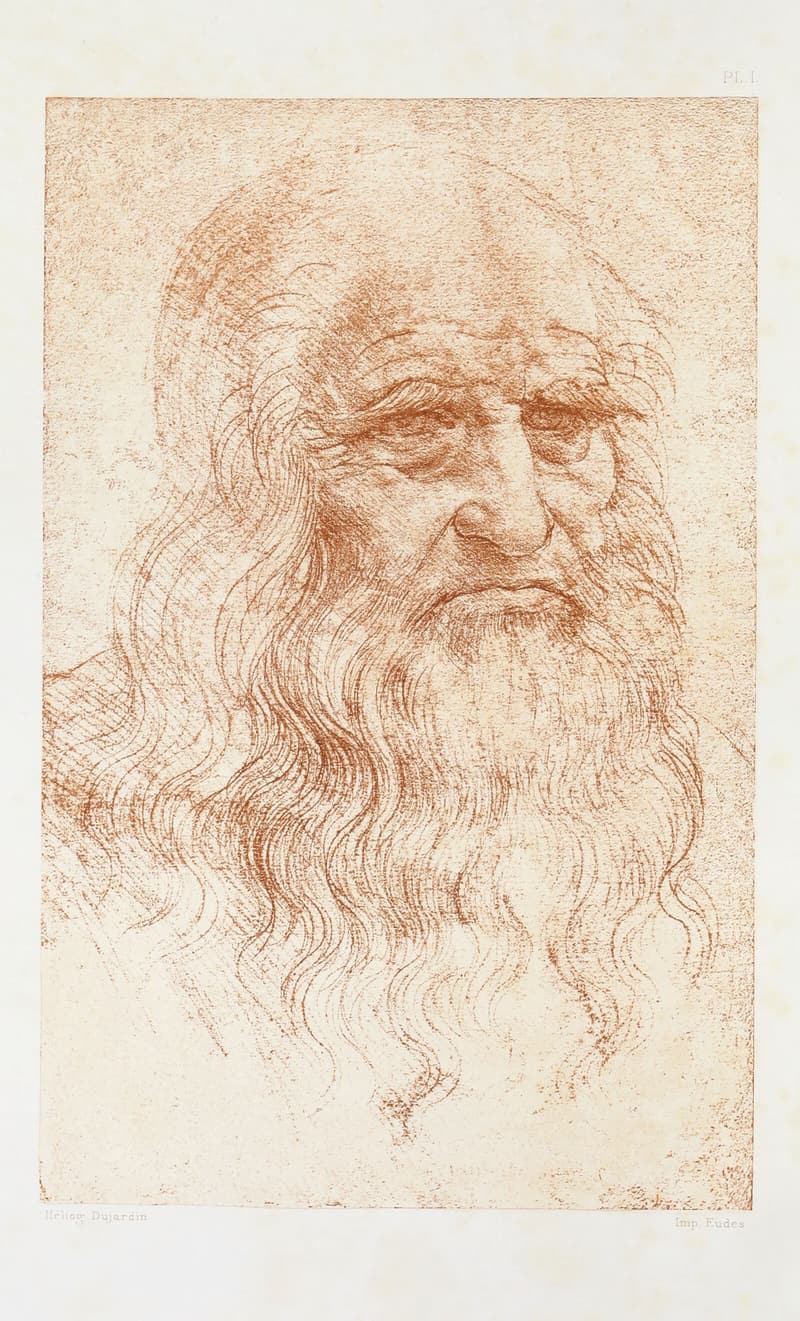
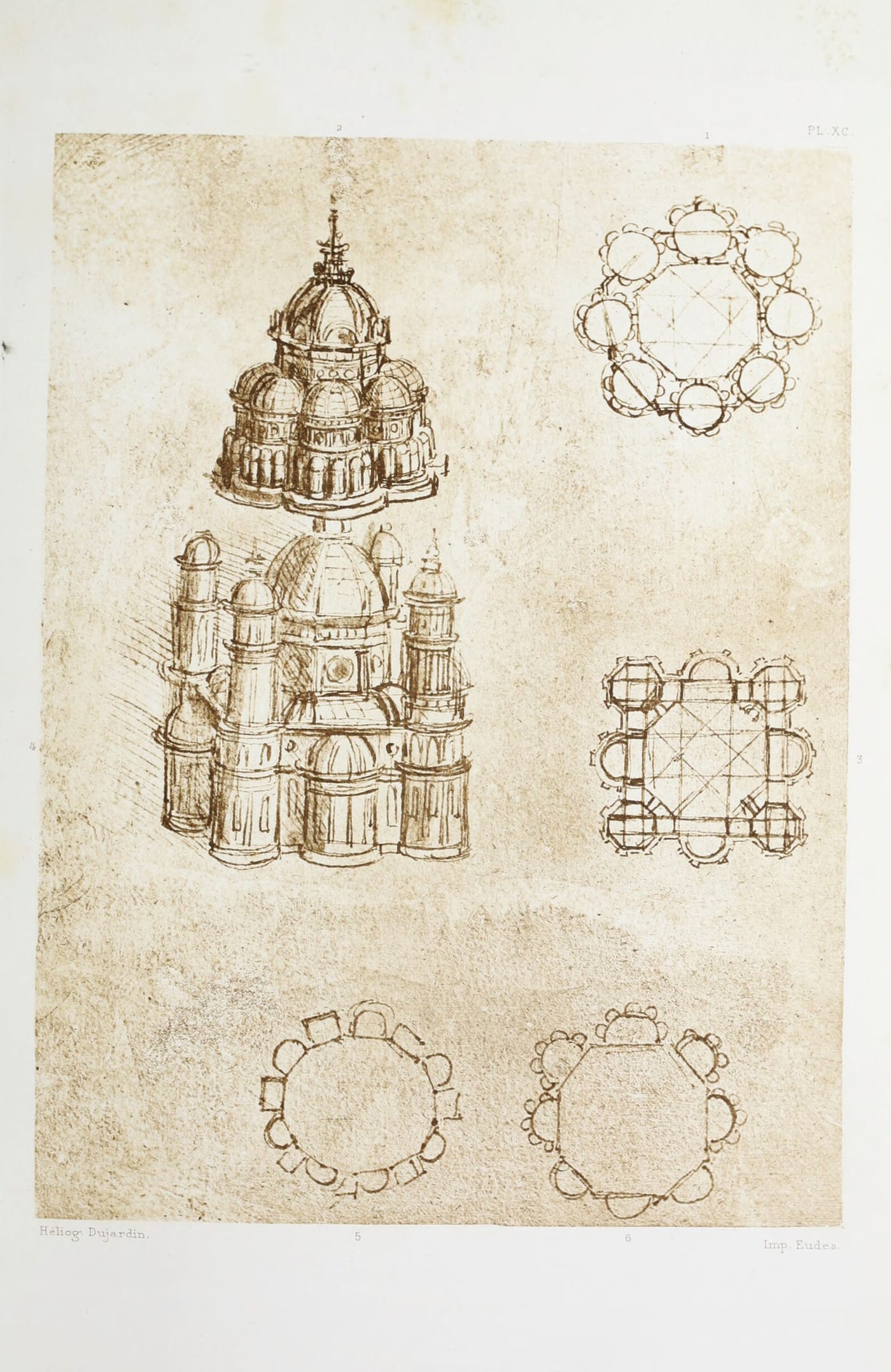
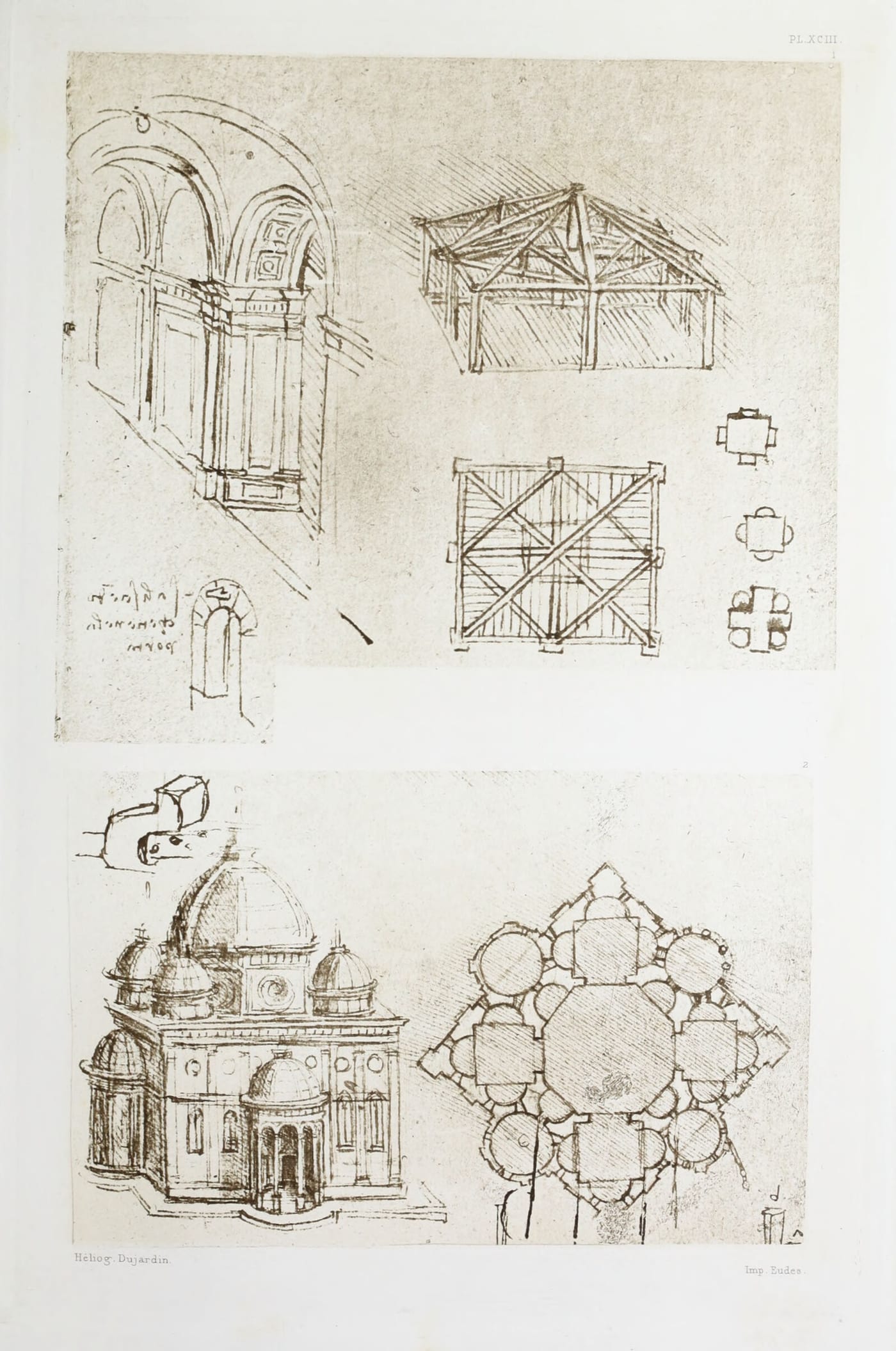
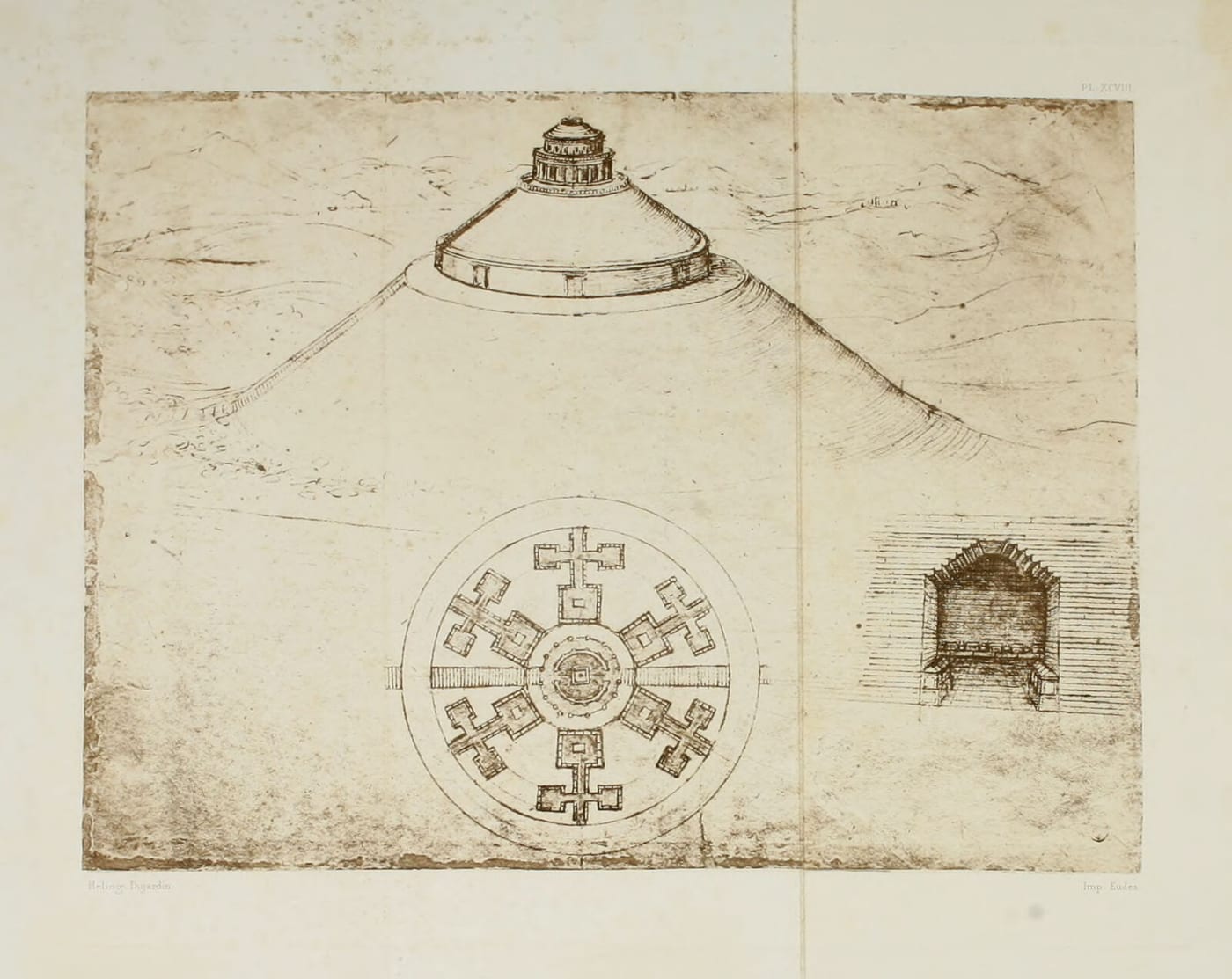
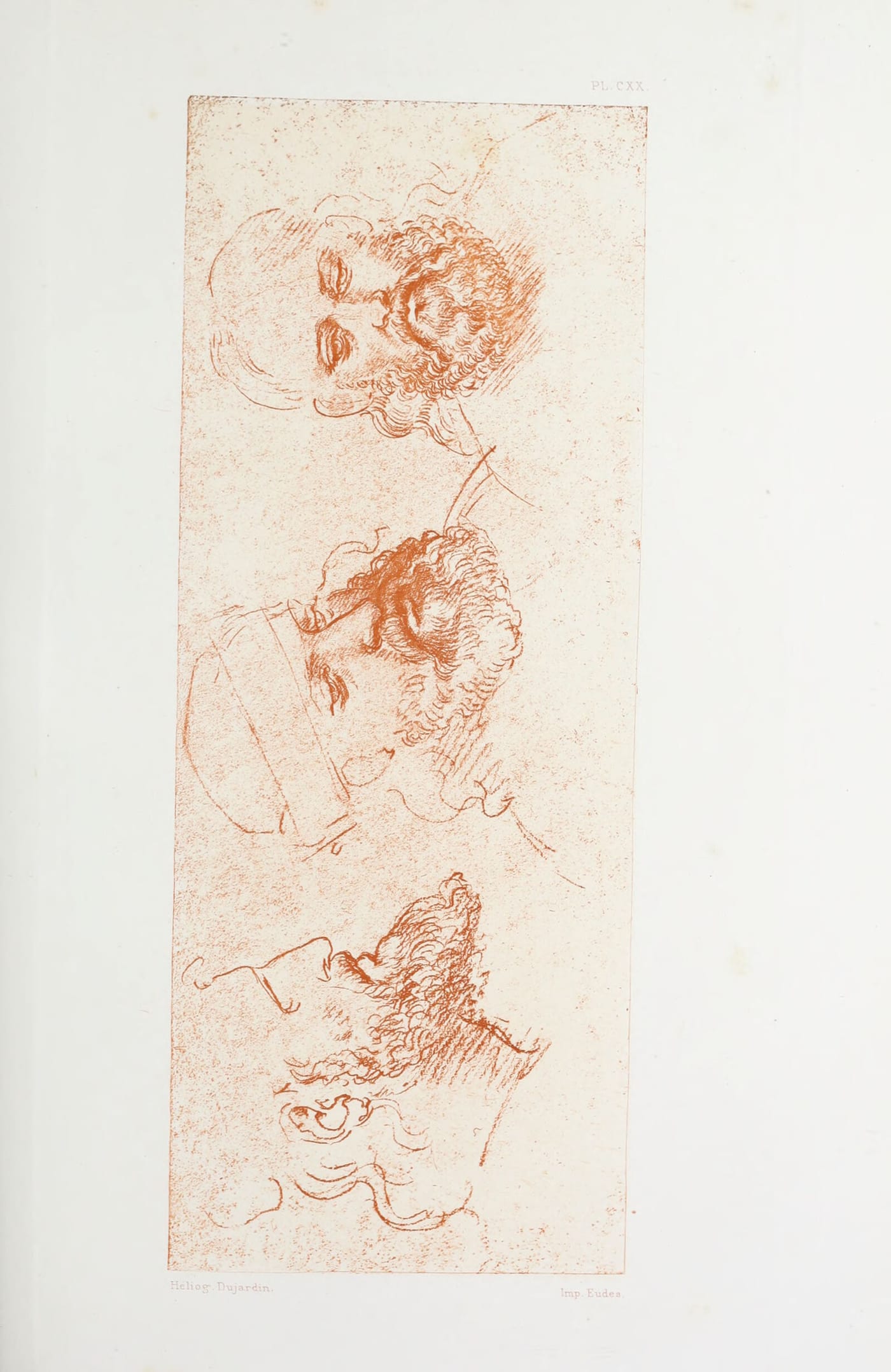
In 1883 Jean Paul Richter went through Leonardo’s scattered manuscripts, transcribed what he could read of the mirror writing, translated it and sorted it by subject. These are the 1,566 passages he chose, in 22 parts, from advice to painters to fables, jokes, shopping lists and letters, with the 122 plates of Leonardo’s drawings his edition printed. Each passage shows the manuscript page it comes from.
Contents
- Richter’s preface
- Part I. Prolegomena and General Introduction to the Book on Painting§ 1 to 39
- Part II. Linear Perspective§ 40 to 109 · 1 plate
- Part III. Six Books on Light and Shade§ 110 to 221 · 8 plates · General Introduction; First Book on Light and Shade; Second Book on Light and Shade; Third Book on Light and Shade; Fourth Book on Light and Shade; Fifth Book on Light and Shade; Sixth Book on Light and Shade
- Part IV. Perspective of Disappearance§ 222 to 262
- Part V. Theory of Colours§ 263 to 288
- Part VI. Perspective of Colour and Aerial Perspective§ 289 to 307
- Part VII. On the Proportions and on the Movements of the Human Figure§ 308 to 392 · 21 plates
- Part VIII. Botany for Painters, and Elements of Landscape Painting§ 393 to 481 · 5 plates
- Part IX. The Practice of Painting§ 482 to 662 · 8 plates · I. Moral Precepts for the Student of Painting; II. The Artist's Studio.—Instruments and Helps for the Application of Perspective.—On Judging of a Picture; III. The Practical Methods of Light and Shade and Aerial Perspective; IV. Of Portrait and Figure Painting; V. Suggestions for Compositions; VI. The Artist's Materials; VII. Philosophy and History of the Art of Painting
- Part X. Studies and Sketches for Pictures and Decorations§ 663 to 705 · 15 plates
- Part XI. Notes on Sculpture§ 706 to 740 · 2 plates
- Part XII. Architectural Designs§ 741 to 769 · 17 plates · I. Plans for towns; II. Plans for canals and streets in a town; III. Castles and Villas; IV. Ecclesiastical Architecture; V. Palace architecture; VI. Studies of architectural details
- Part XIII. Theoretical Writings on Architecture§ 770 to 795 · 3 plates · I. On Fissures in Walls; II. On Fissures in Niches; III. On the Nature of the Arch; IV. On Foundations, the Nature of the Ground and Supports; V. On the Resistance of Beams
- Part XIV. Anatomy, Zoology and Physiology§ 796 to 856 · 1 plate · I. Anatomy; II. Zoology and Comparative Anatomy; III. Physiology
- Part XV. Astronomy§ 857 to 918 · 1 plate · I. The Earth As a Planet; II. The Sun; III. The Moon
- Part XVI. Physical Geography§ 919 to 1000 · 1 plate · Introduction; I. Of the Nature of Water; II. On the Ocean; III. Subterranean Water Courses; IV. Of Rivers; V. On Mountains; VI. Geological Problems; VII. On the Atmosphere
- Part XVII. Topographical Notes§ 1001 to 1112 · 8 plates · I. Italy; II. France; III. The Countries of the Western End of the Mediterranean; IV. The Levant
- Part XVIII. Naval Warfare.—Mechanical Appliances.—Music§ 1113 to 1131
- Part XIX. Philosophical Maxims. Morals. Polemics and Speculations§ 1132 to 1219 · 1 plate · I. Philosophical Maxims; II. Morals; III. Polemics.—Speculation
- Part XX. Humorous Writings§ 1220 to 1335 · 2 plates · I. Studies on the Life and Habits of Animals; II. Fables; III. Jests and Tales; IV. Prophecies; V. Draughts and Schemes for the Humorous Writings
- Part XXI. Letters. Personal Records. Dated Notes§ 1336 to 1378 · 4 plates
- Part XXII. Miscellaneous Notes§ 1379 to 1566
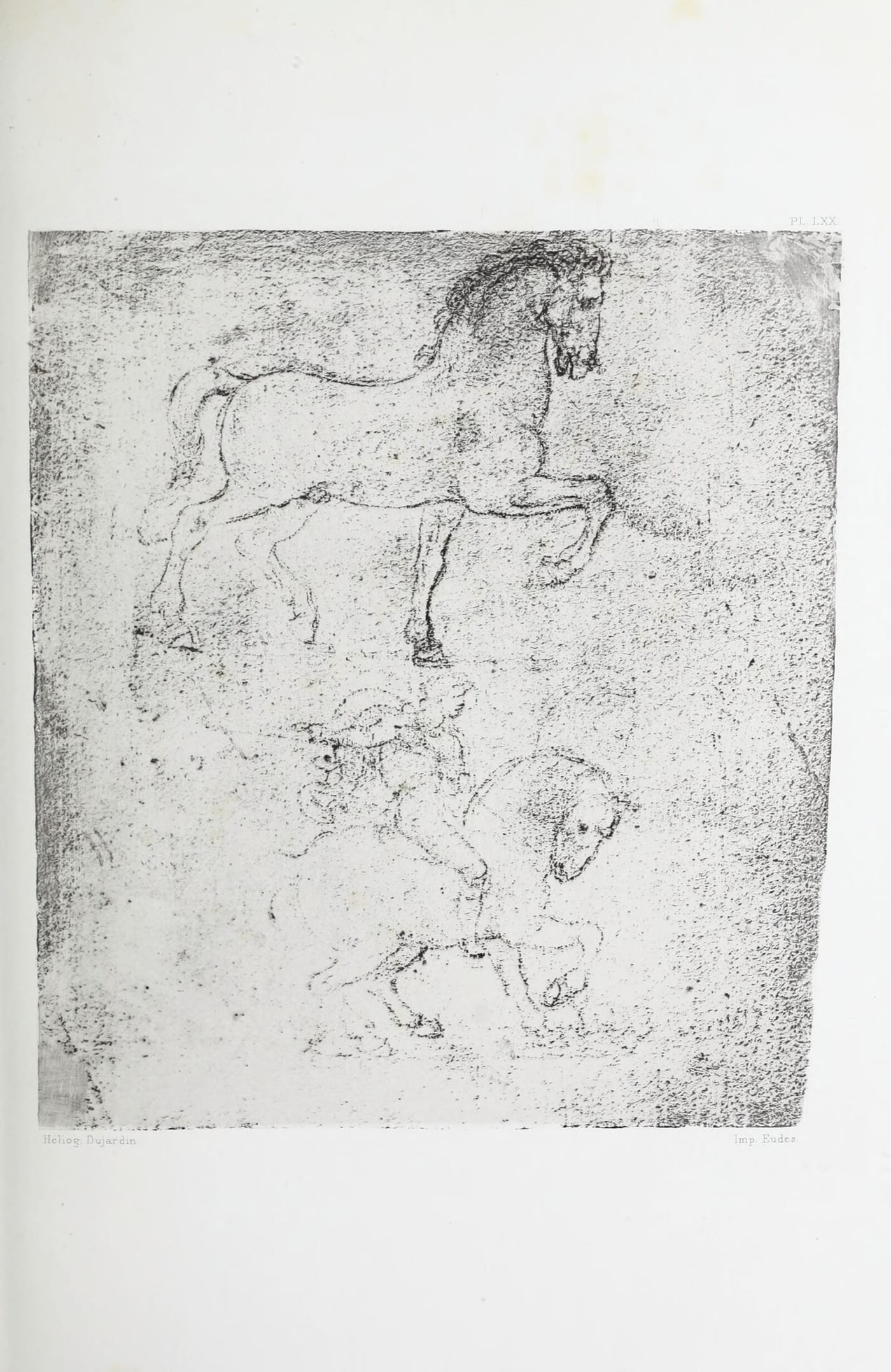
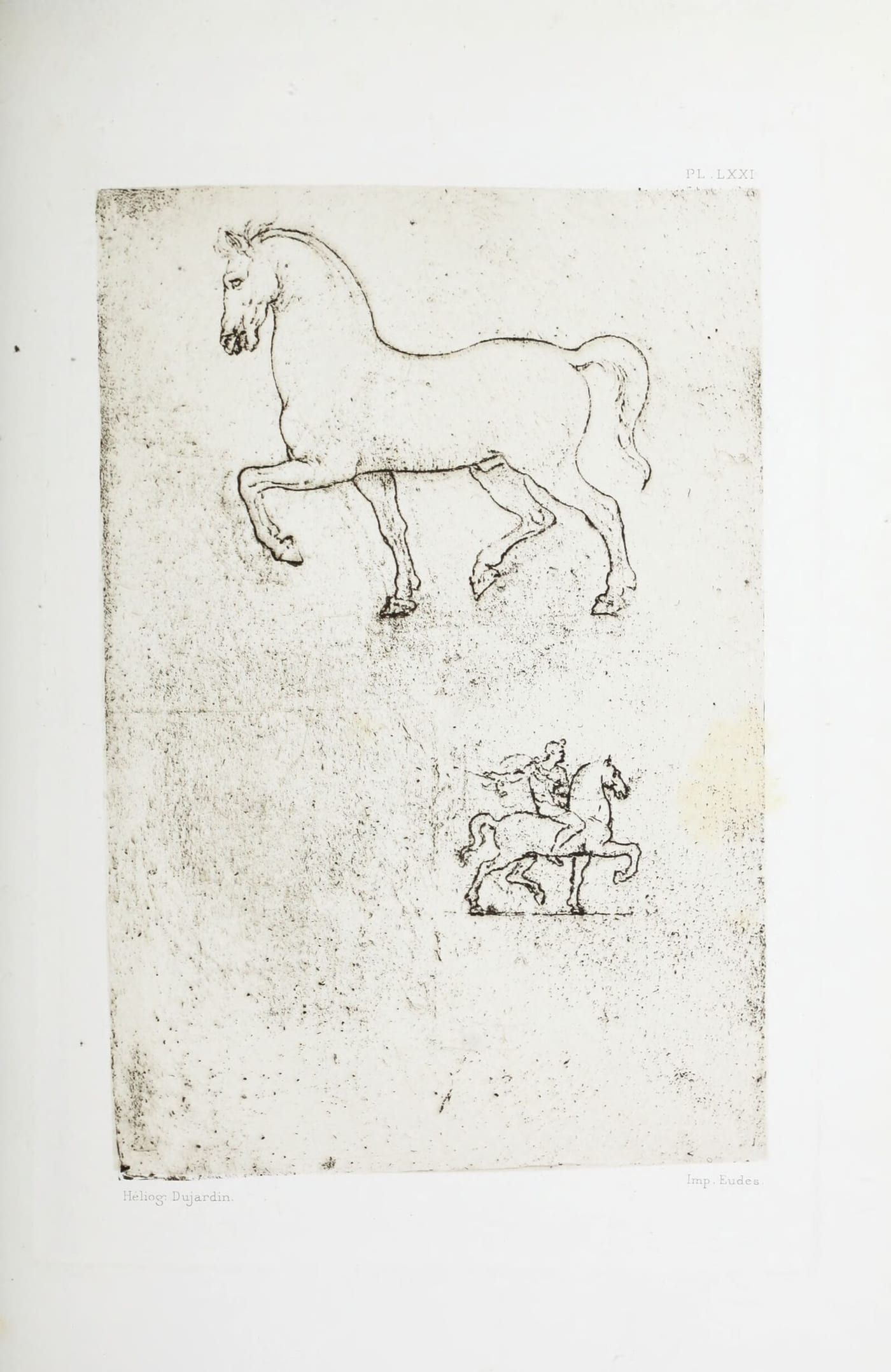
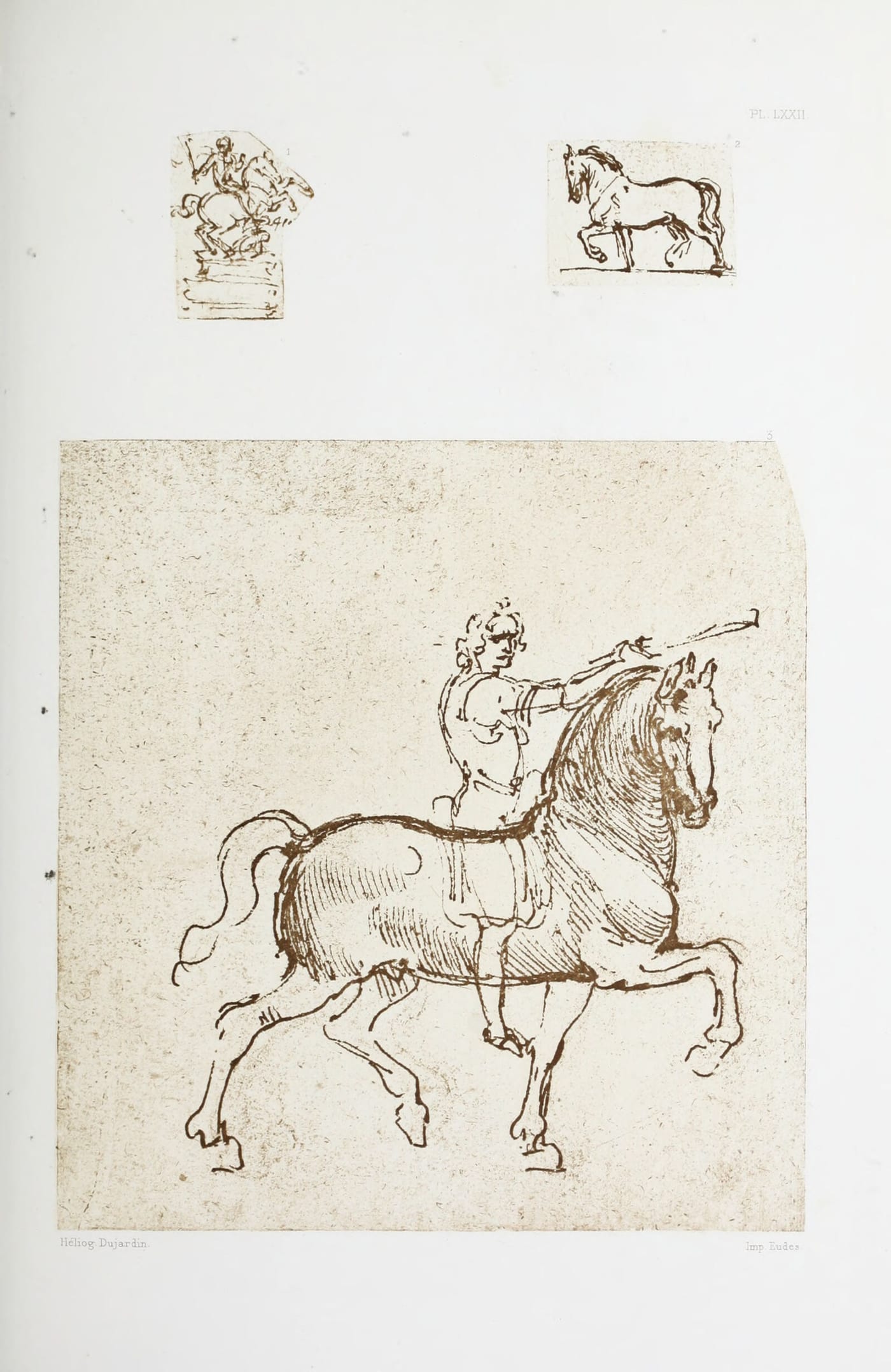
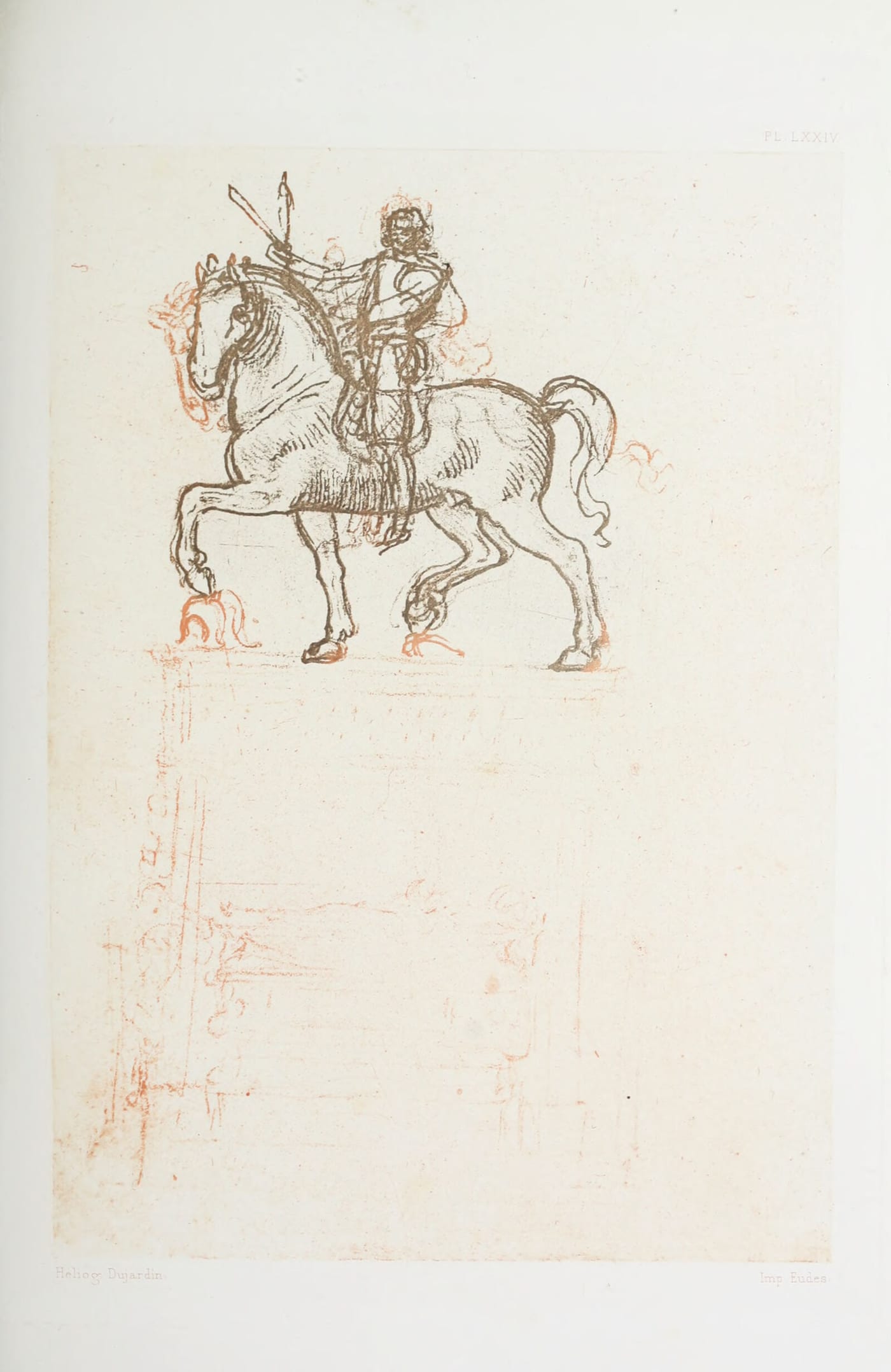
- More plates24 plates no passage cites directly
- Sources
Richter’s preface
A singular fatality has ruled the destiny of nearly all the most famous of Leonardo da Vinci's works. Two of the three most important were never completed, obstacles having arisen during his life-time, which obliged him to leave them unfinished; namely the Sforza Monument and the Wall-painting of the Battle of Anghiari, while the third—the picture of the Last Supper at Milan—has suffered irremediable injury from decay and the repeated restorations to which it was recklessly subjected during the XVIIth and XVIIIth centuries. Nevertheless, no other picture of the Renaissance has become so wellknown and popular through copies of every description.
Vasari says, and rightly, in his Life of Leonardo, "that he laboured much more by his word than in fact or by deed", and the biographer evidently had in his mind the numerous works in Manuscript which have been preserved to this day. To us, now, it seems almost inexplicable that these valuable and interesting original texts should have remained so long unpublished, and indeed forgotten. It is certain that during the XVIth and XVIIth centuries their exceptional value was highly appreciated. This is proved not merely by the prices which they commanded, but also by the exceptional interest which has been attached to the change of ownership of merely a few pages of Manuscript.
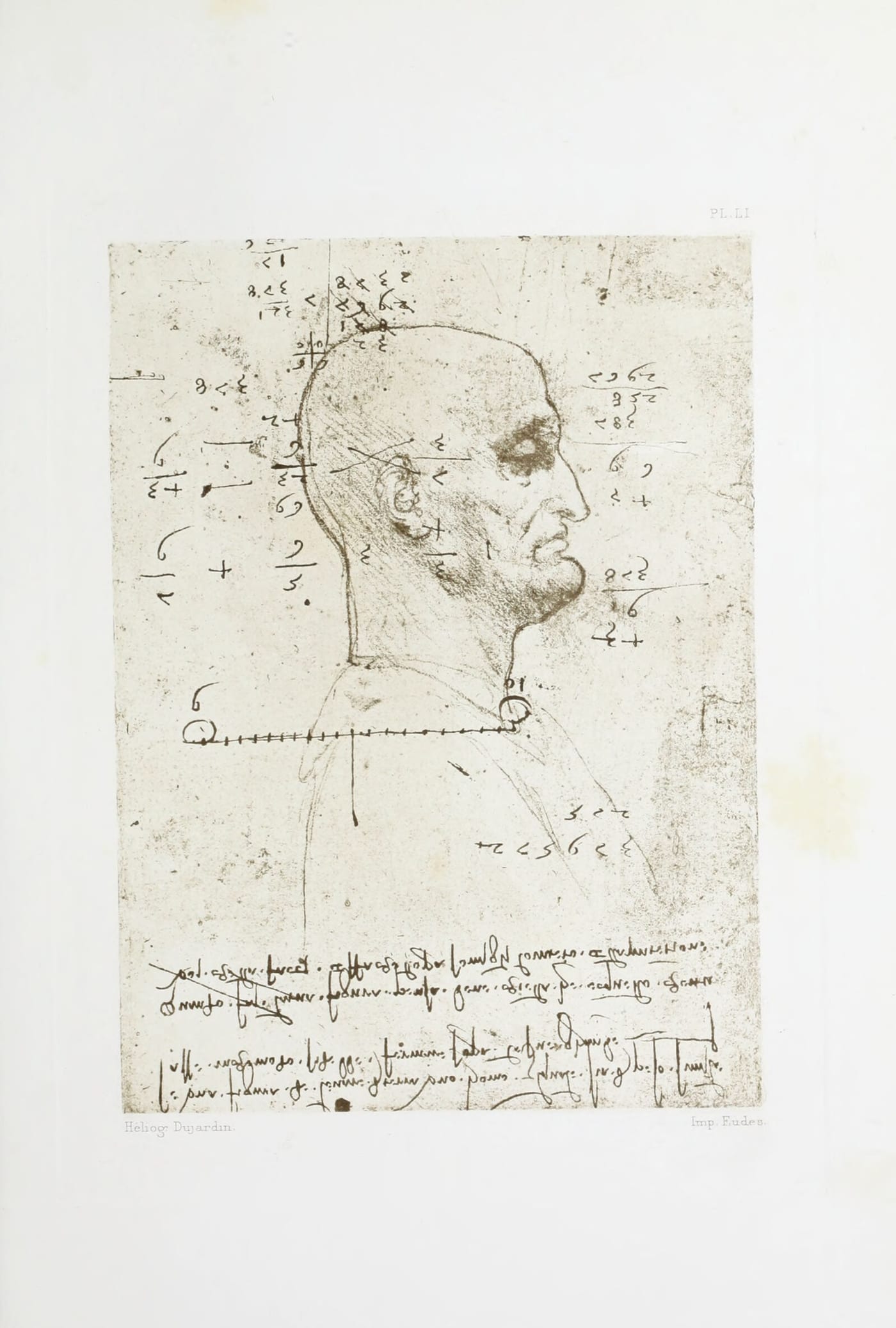
That, notwithstanding this eagerness to possess the Manuscripts, their contents remained a mystery, can only be accounted for by the many and great difficulties attending the task of deciphering them. The handwriting is so peculiar that it requires considerable practice to read even a few detached phrases, much more to solve with any certainty the numerous difficulties of alternative readings, and to master the sense as a connected whole. Vasari observes with reference to Leonardos writing: "he wrote backwards, in rude characters, and with the left hand, so that any one who is not practised in reading them, cannot understand them". The aid of a mirror in reading reversed handwriting appears to me available only for a first experimental reading. Speaking from my own experience, the persistent use of it is too fatiguing and inconvenient to be practically advisable, considering the enormous mass of Manuscripts to be deciphered. And as, after all, Leonardo's handwriting runs backwards just as all Oriental character runs backwards—that is to say from right to left—the difficulty of reading direct from the writing is not insuperable. This obvious peculiarity in the writing is not, however, by any means the only obstacle in the way of mastering the text. Leonardo made use of an orthography peculiar to himself; he had a fashion of amalgamating several short words into one long one, or, again, he would quite arbitrarily divide a long word into two separate halves; added to this there is no punctuation whatever to regulate the division and construction of the sentences, nor are there any accents—and the reader may imagine that such difficulties were almost sufficient to make the task seem a desperate one to a beginner. It is therefore not surprising that the good intentions of some of Leonardo s most reverent admirers should have failed.
Leonardos literary labours in various departments both of Art and of Science were those essentially of an enquirer, hence the analytical method is that which he employs in arguing out his investigations and dissertations. The vast structure of his scientific theories is consequently built up of numerous separate researches, and it is much to be lamented that he should never have collated and arranged them. His love for detailed research—as it seems to me—was the reason that in almost all the Manuscripts, the different paragraphs appear to us to be in utter confusion; on one and the same page, observations on the most dissimilar subjects follow each other without any connection. A page, for instance, will begin with some principles of astronomy, or the motion of the earth; then come the laws of sound, and finally some precepts as to colour. Another page will begin with his investigations on the structure of the intestines, and end with philosophical remarks as to the relations of poetry to painting; and so forth.
Leonardo himself lamented this confusion, and for that reason I do not think that the publication of the texts in the order in which they occur in the originals would at all fulfil his intentions. No reader could find his way through such a labyrinth; Leonardo himself could not have done it.
Added to this, more than half of the five thousand manuscript pages which now remain to us, are written on loose leaves, and at present arranged in a manner which has no justification beyond the fancy of the collector who first brought them together to make volumes of more or less extent. Nay, even in the volumes, the pages of which were numbered by Leonardo himself, their order, so far as the connection of the texts was concerned, was obviously a matter of indifference to him. The only point he seems to have kept in view, when first writing down his notes, was that each observation should be complete to the end on the page on which it was begun. The exceptions to this rule are extremely few, and it is certainly noteworthy that we find in such cases, in bound volumes with his numbered pages, the written observations: "turn over", "This is the continuation of the previous page", and the like. Is not this sufficient to prove that it was only in quite exceptional cases that the writer intended the consecutive pages to remain connected, when he should, at last, carry out the often planned arrangement of his writings?
What this final arrangement was to be, Leonardo has in most cases indicated with considerable completeness. In other cases this authoritative clue is wanting, but the difficulties arising from this are not insuperable; for, as the subject of the separate paragraphs is always distinct and well defined in itself, it is quite possible to construct a well-planned whole, out of the scattered materials of his scientific system, and I may venture to state that I have devoted especial care and thought to the due execution of this responsible task.
The beginning of Leonardo's literary labours dates from about his thirty-seventh year, and he seems to have carried them on without any serious interruption till his death. Thus the Manuscripts that remain represent a period of about thirty years. Within this space of time his handwriting altered so little that it is impossible to judge from it of the date of any particular text. The exact dates, indeed, can only be assigned to certain note-books in which the year is incidentally indicated, and in which the order of the leaves has not been altered since Leonardo used them. The assistance these afford for a chronological arrangement of the Manuscripts is generally self evident. By this clue I have assigned to the original Manuscripts now scattered through England, Italy and France, the order of their production, as in many matters of detail it is highly important to be able to verify the time and place at which certain observations were made and registered. For this purpose the Bibliography of the Manuscripts given at the end of Vol. II, may be regarded as an Index, not far short of complete, of all Leonardo s literary works now extant. The consecutive numbers (from 1 to 1566) at the head of each passage in this work, indicate their logical sequence with reference to the subjects; while the letters and figures to the left of each paragraph refer to the original Manuscript and number of the page, on which that particular passage is to be found. Thus the reader, by referring to the List of Manuscripts at the beginning of Volume I, and to the Bibliography at the end of Volume II, can, in every instance, easily ascertain, not merely the period to which the passage belongs, but also exactly where it stood in the original document. Thus, too, by following the sequence of the numbers in the Bibliographical index, the reader may reconstruct the original order of the Manuscripts and recompose the various texts to be found on the original sheets—so much of it, that is to say, as by its subject-matter came within the scope of this work. It may, however, be here observed that Leonardo s Manuscripts contain, besides the passages here printed, a great number of notes and dissertations on Mechanics, Physics, and some other subjects, many of which could only be satisfactorily dealt with by specialists. I have given as complete a review of these writings as seemed necessary in the Bibliographical notes.
In 1651, Raphael Trichet Dufresne, of Paris, published a selection from Leonardo's writings on painting, and this treatise became so popular that it has since been reprinted about two-and-twenty times, and in six different languages. But none of these editions were derived from the original texts, which were supposed to have been lost, but from early copies, in which Leonardo's text had been more or less mutilated, and which were all fragmentary. The oldest and on the whole the best copy of Leonardo's essays and precepts on Painting is in the Vatican Library; this has been twice printed, first by Manzi, in 1817, and secondly by Ludwig, in 1882. Still, this ancient copy, and the published editions of it, contain much for which it would be rash to hold Leonardo responsible, and some portions—such as the very important rules for the proportions of the human figure—are wholly wanting; on the other hand they contain passages which, if they are genuine, cannot now be verified from any original Manuscript extant. These copies, at any rate neither give us the original order of the texts, as written by Leonardo, nor do they afford any substitute, by connecting them on a rational scheme; indeed, in their chaotic confusion they are anything rather than satisfactory reading. The fault, no doubt, rests with the compiler of the Vatican copy, which would seem to be the source whence all the published and extensively known texts were derived; for, instead of arranging the passages himself, he was satisfied with recording a suggestion for a final arrangement of them into eight distinct parts, without attempting to carry out his scheme. Under the mistaken idea that this plan of distribution might be that, not of the compiler, but of Leonardo himself, the various editors, down to the present day, have very injudiciously continued to adopt this order—or rather disorder.
I, like other enquirers, had given up the original Manuscript of the Trattato della Pittura for lost, till, in the beginning of 1880, I was enabled, by the liberality of Lord Ashburnham, to inspect his Manuscripts, and was so happy as to discover among them the original text of the best-known portion of the Trattato in his magnificent library at Ashburnham Place. Though this discovery was of a fragment only—but a considerable fragment—inciting me to further search, it gave the key to the mystery which had so long enveloped the first origin of all the known copies of the Trattato. The extensive researches I was subsequently enabled to prosecute, and the results of which are combined in this work, were only rendered possible by the unrestricted permission granted me to investigate all the Manuscripts by Leonardo dispersed throughout Europe, and to reproduce the highly important original sketches they contain, by the process of "photogravure". Her Majesty the Queen graciously accorded me special permission to copy for publication the Manuscripts at the Royal Library at Windsor. The Commission Centrale Administrative de l'Institut de France, Paris, gave me, in the most liberal manner, in answer to an application from Sir Frederic Leighton, P. R. A., Corresponding member of the Institut, free permission to work for several months in their private collection at deciphering the Manuscripts preserved there. The same favour which Lord Ashburnham had already granted me was extended to me by the Earl of Leicester, the Marchese Trivulsi, and the Curators of the Ambrosian Library at Milan, by the Conte Manzoni at Rome and by other private owners of Manuscripts of Leonardo's; as also by the Directors of the Louvre at Paris; the Accademia at Venice; the Uffizi at Florence; the Royal Library at Turin; and the British Museum, and the South Kensington Museum. I am also greatly indebted to the Librarians of these various collections for much assistance in my labours; and more particularly to Monsieur Louis Lalanne, of the Institut de France, the Abbate Ceriani, of the Ambrosian Library, Mr. Maude Thompson, Keeper of Manuscripts at the British Museum, Mr. Holmes, the Queens Librarian at Windsor, the Revd Vere Bayne, Librarian of Christ Church College at Oxford, and the Revd A. Napier, Librarian to the Earl of Leicester at Holkham Hall.
In correcting the Italian text for the press, I have had the advantage of valuable advice from the Commendatore Giov. Morelli, Senatore del Regno, and from Signor Gustavo Frizzoni, of Milan. The translation, under many difficulties, of the Italian text into English, is mainly due to Mrs. R. C. Bell; while the rendering of several of the most puzzling and important passages, particularly in the second half of Vol. I, I owe to the indefatigable interest taken in this work by Mr. E. J. Poynter R. A. Finally I must express my thanks to Mr. Alfred Marks, of Long Ditton, who has most kindly assisted me throughout in the revision of the proof sheets.
The notes and dissertations on the texts on Architecture in Vol. II I owe to my friend Baron Henri de Geymuller, of Paris.
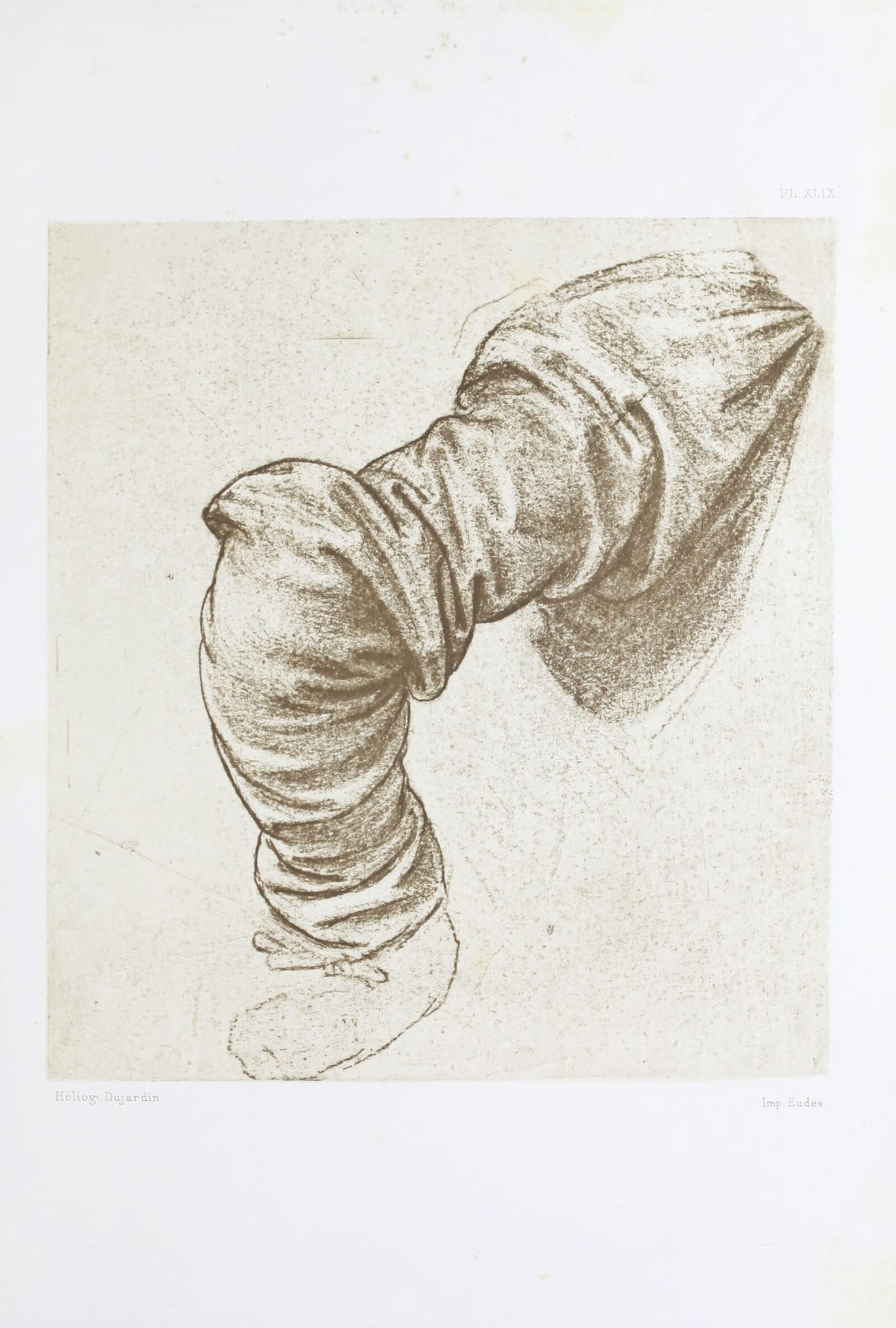
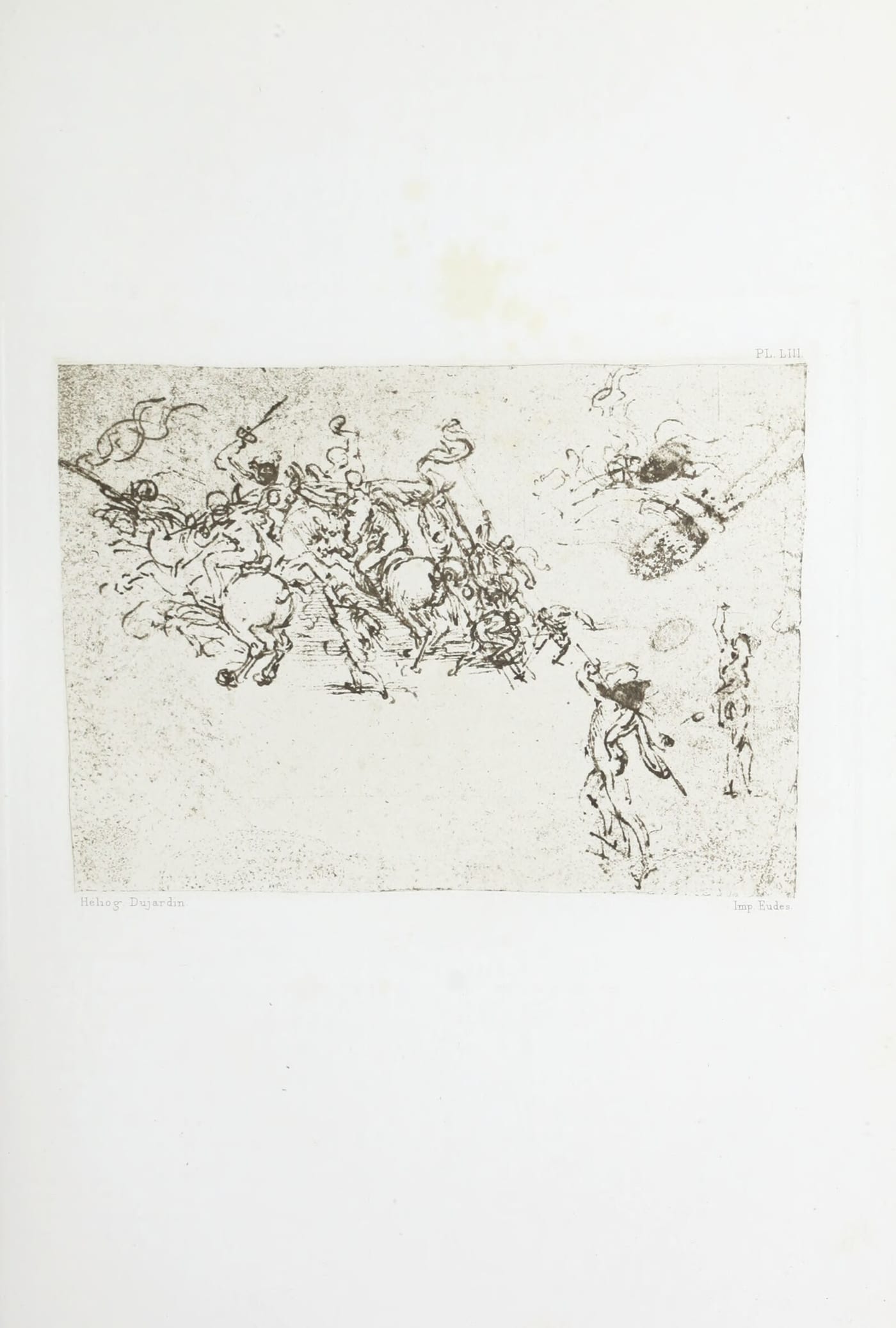
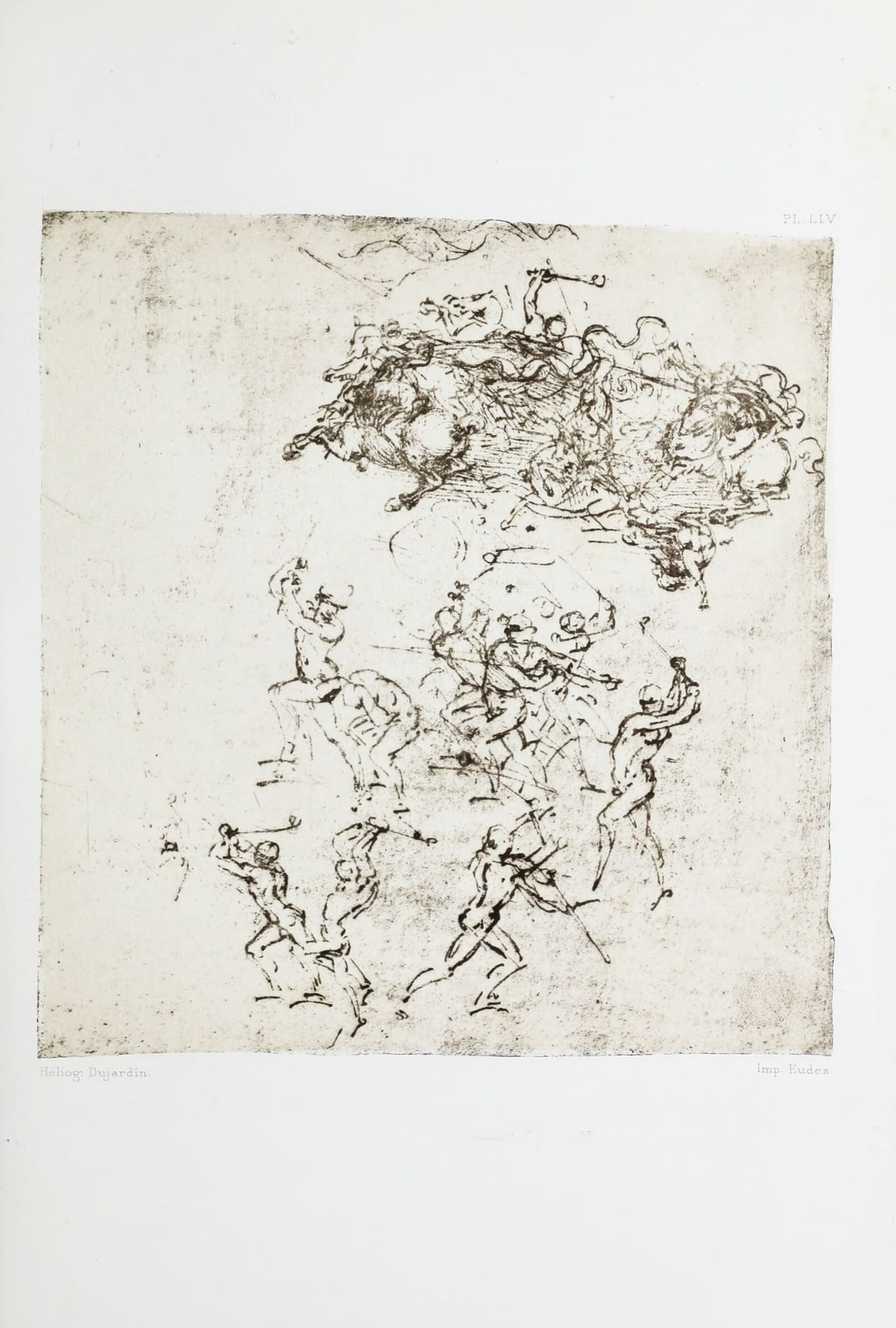
I may further mention with regard to the illustrations, that the negatives for the production of the "photo-gravures" by Monsieur Dujardin of Paris were all taken direct from the originals.
It is scarcely necessary to add that most of the drawings here reproduced in facsimile have never been published before. As I am now, on the termination of a work of several years' duration, in a position to review the general tenour of Leonardos writings, I may perhaps be permitted to add a word as to my own estimate of the value of their contents. I have already shown that it is due to nothing but a fortuitous succession of unfortunate circumstances, that we should not, long since, have known Leonardo, not merely as a Painter, but as an Author, a Philosopher, and a Naturalist. There can be no doubt that in more than one department his principles and discoveries were infinitely more in accord with the teachings of modern science, than with the views of his contemporaries. For this reason his extraordinary gifts and merits are far more likely to be appreciated in our own time than they could have been during the preceding centuries. He has been unjustly accused of having squandered his powers, by beginning a variety of studies and then, having hardly begun, throwing them aside. The truth is that the labours of three centuries have hardly sufficed for the elucidation of some of the problems which occupied his mighty mind.
Alexander von Humboldt has borne witness that "he was the first to start on the road towards the point where all the impressions of our senses converge in the idea of the Unity of Nature" Nay, yet more may be said. The very words which are inscribed on the monument of Alexander von Humboldt himself, at Berlin, are perhaps the most appropriate in which we can sum up our estimate of Leonardo's genius:
"Majestati naturae par ingenium."
LONDON, April 1883.
F. P. R.
More plates
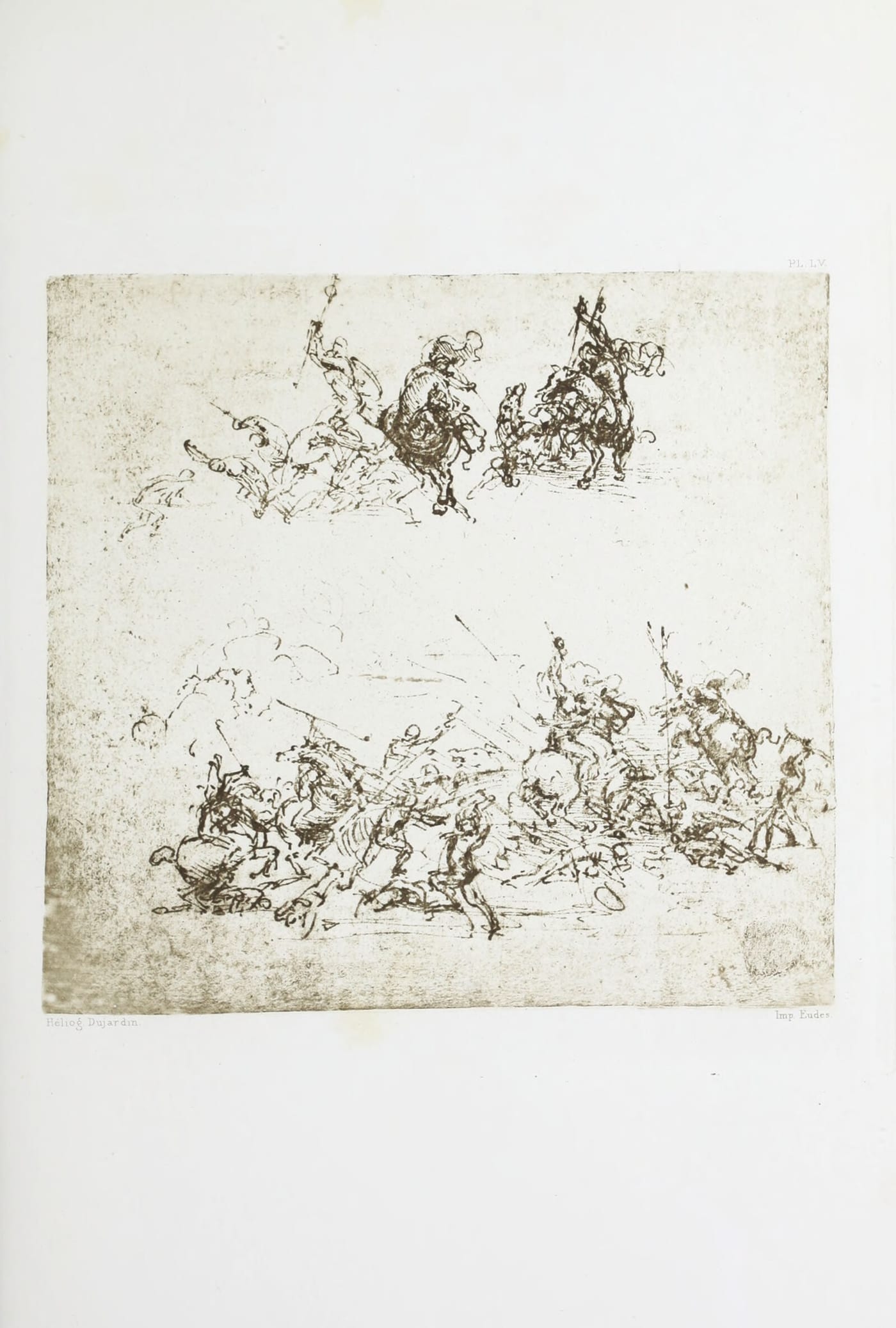
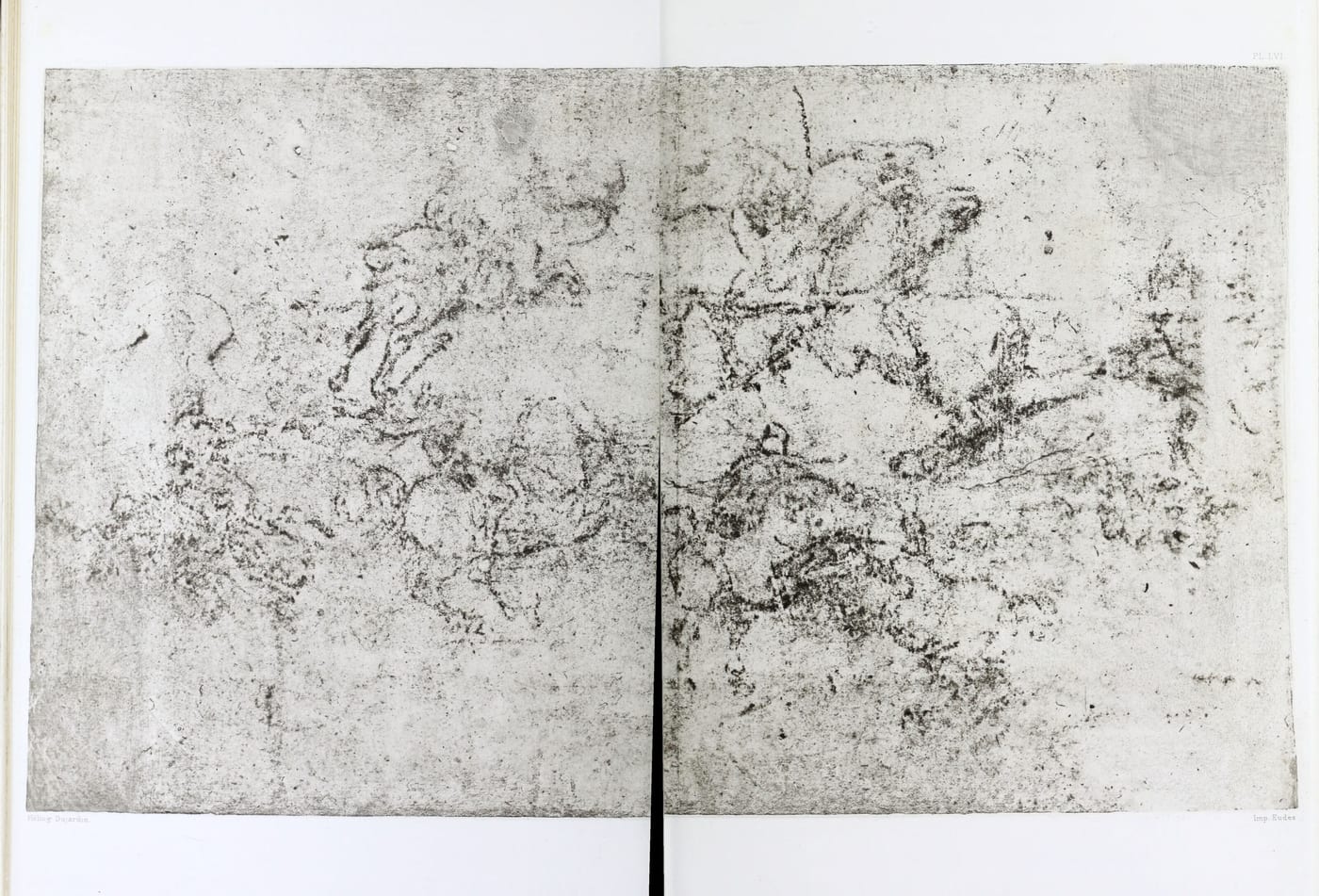
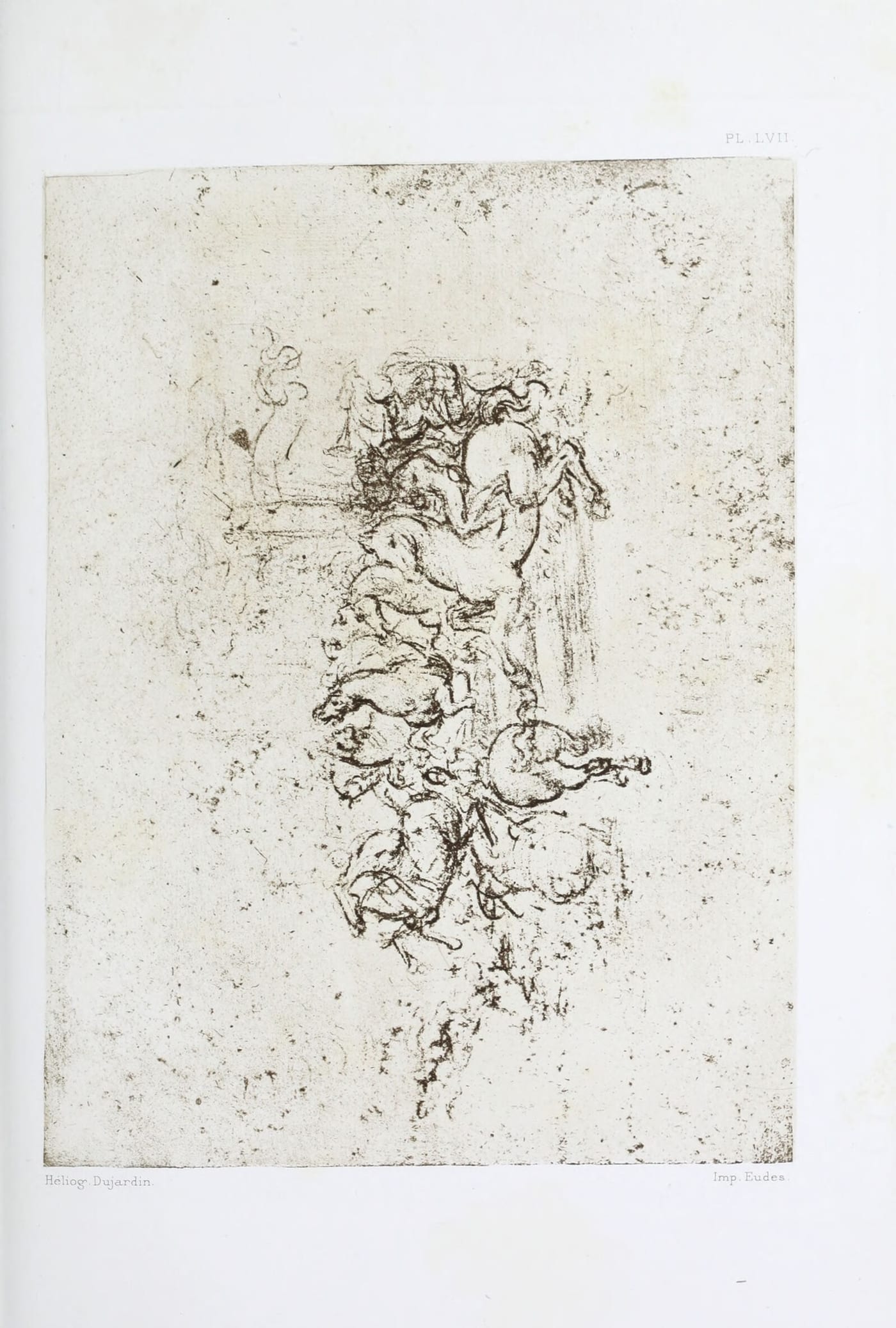
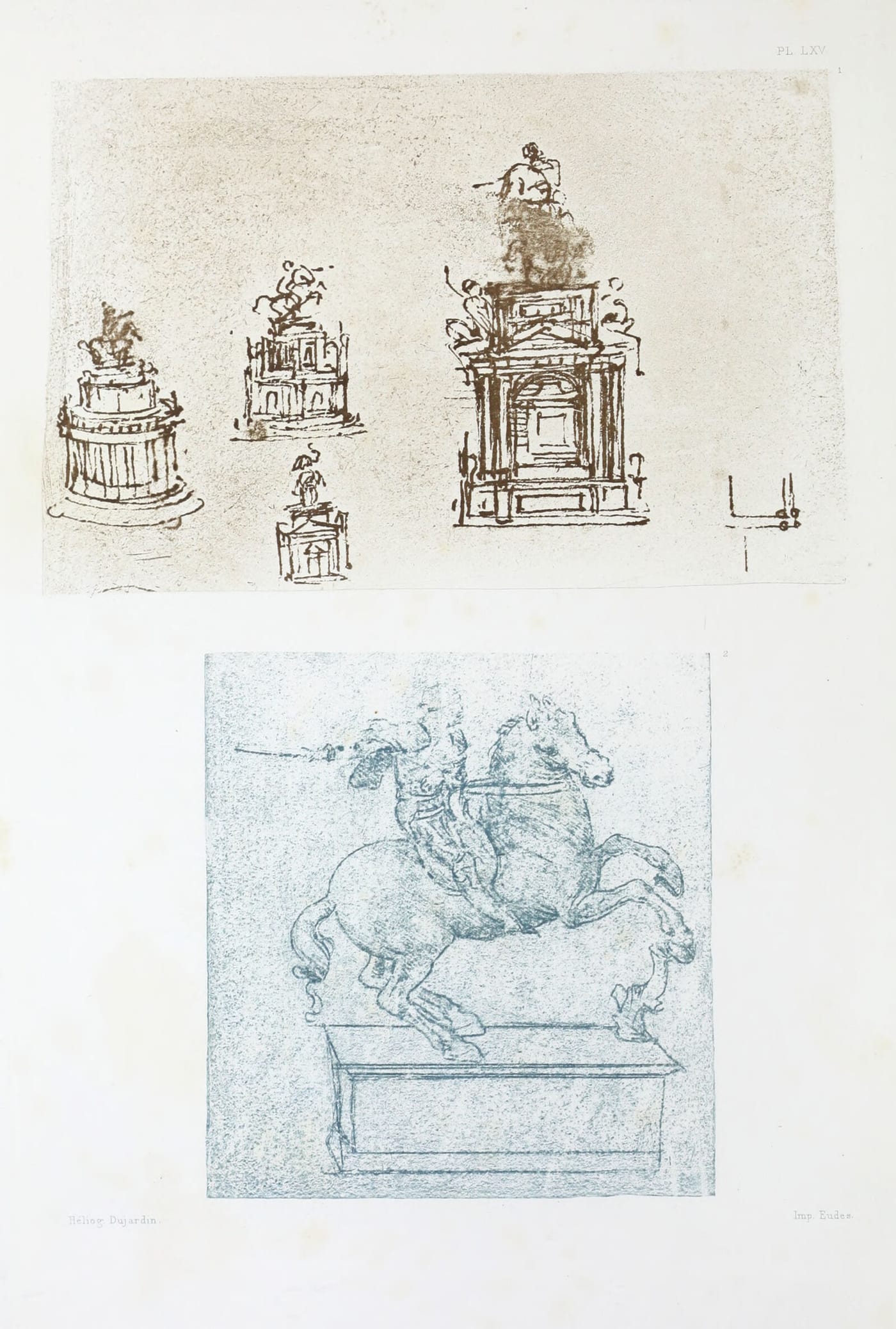
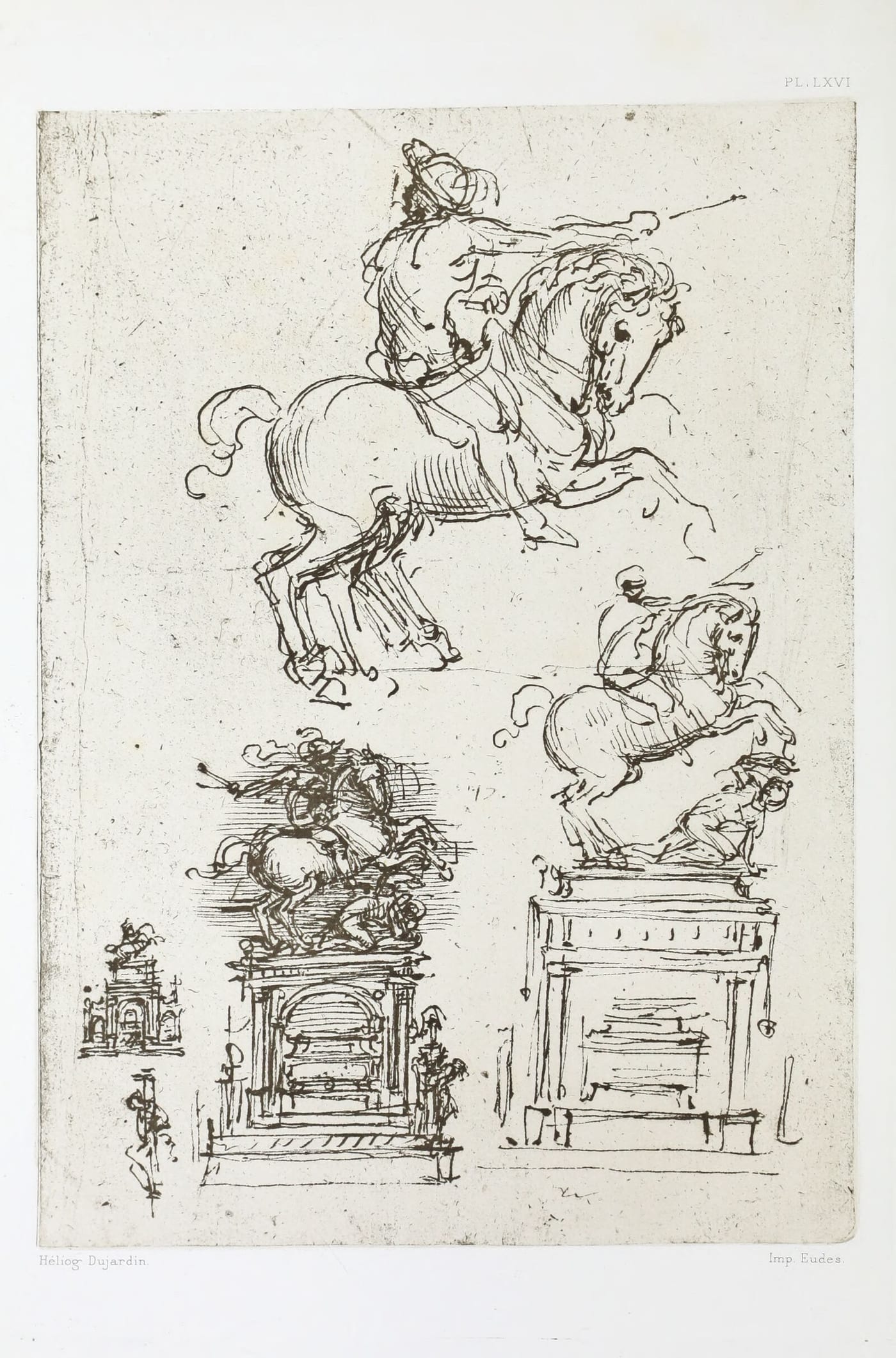
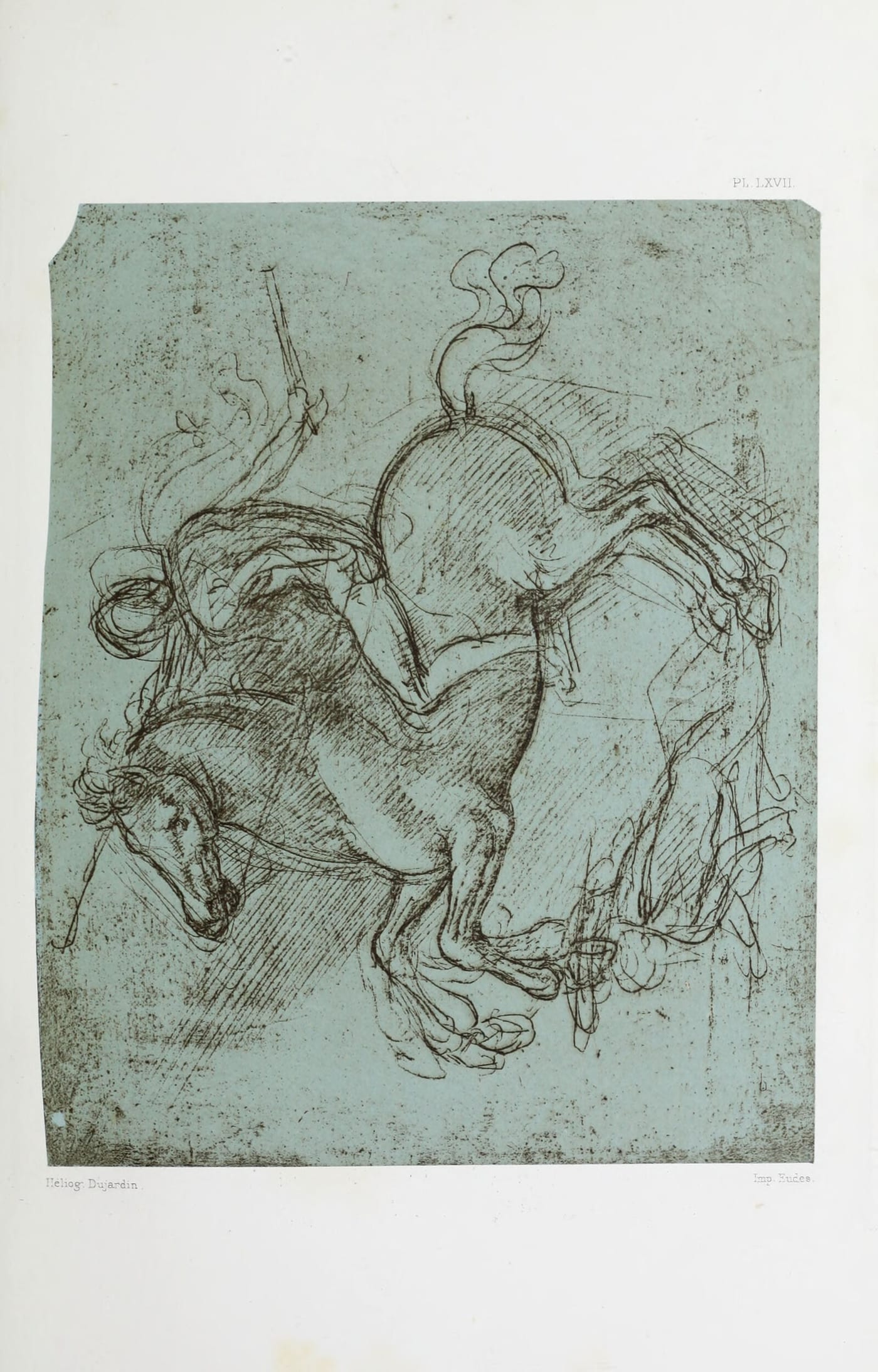
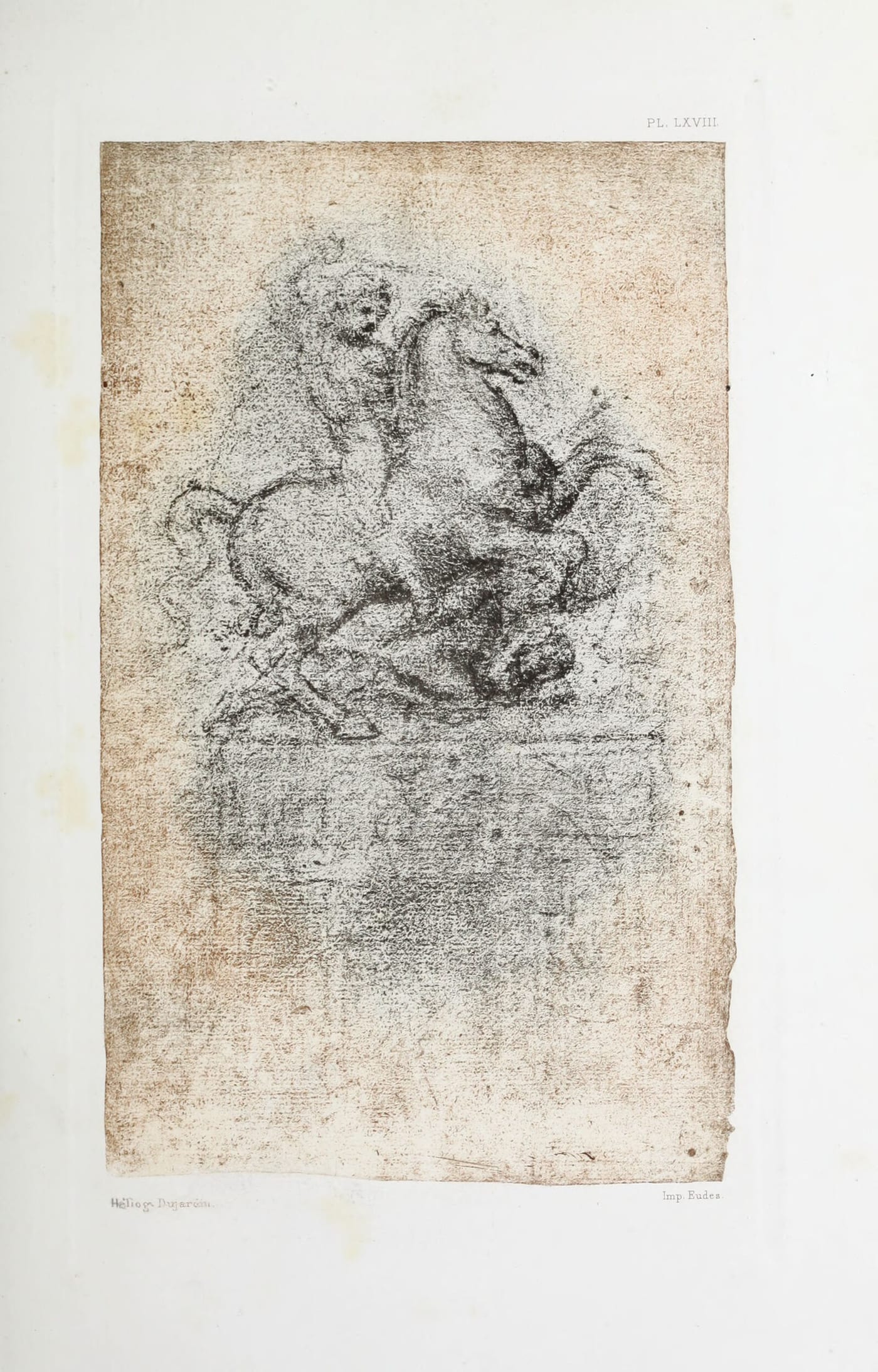
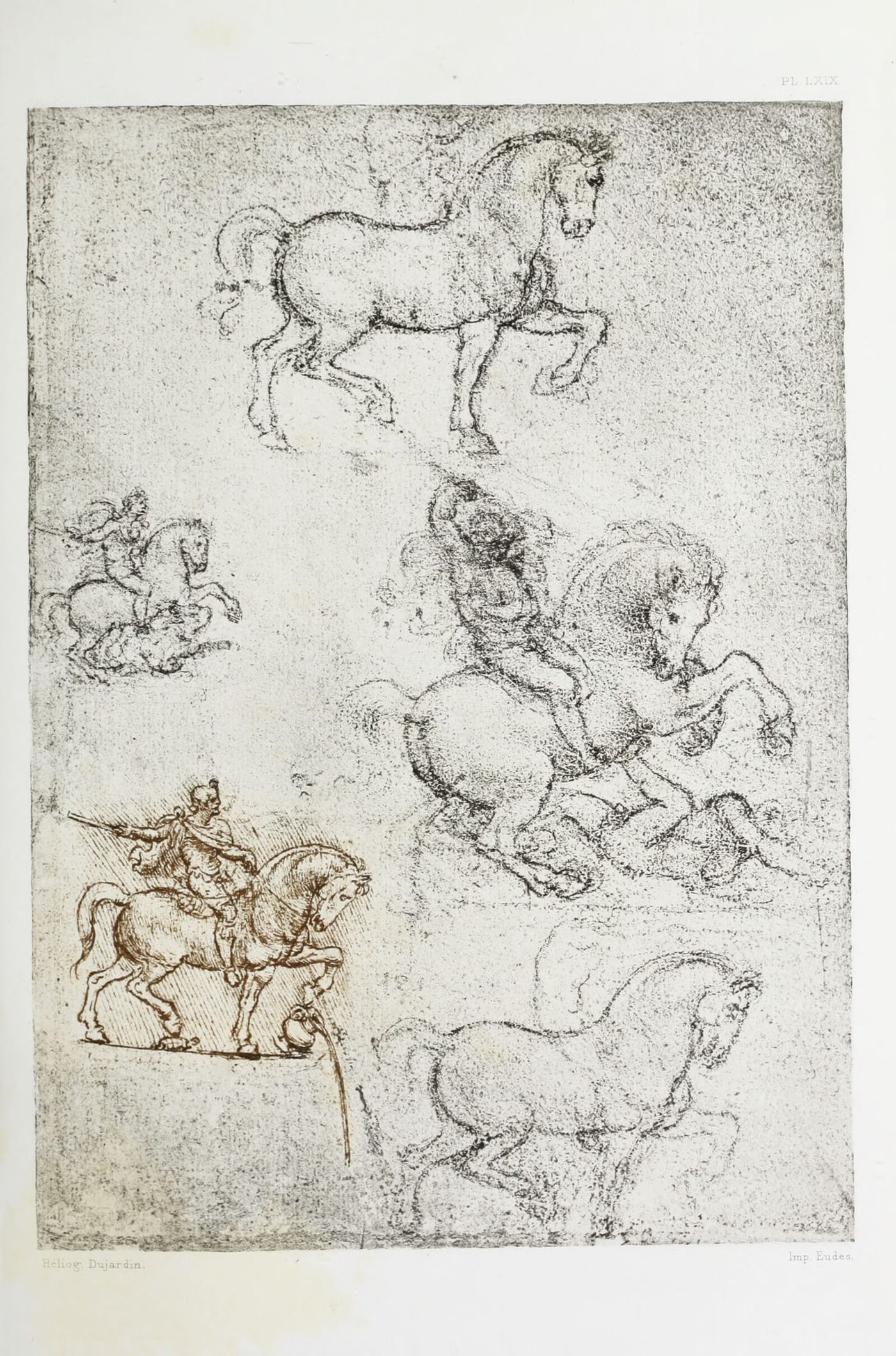
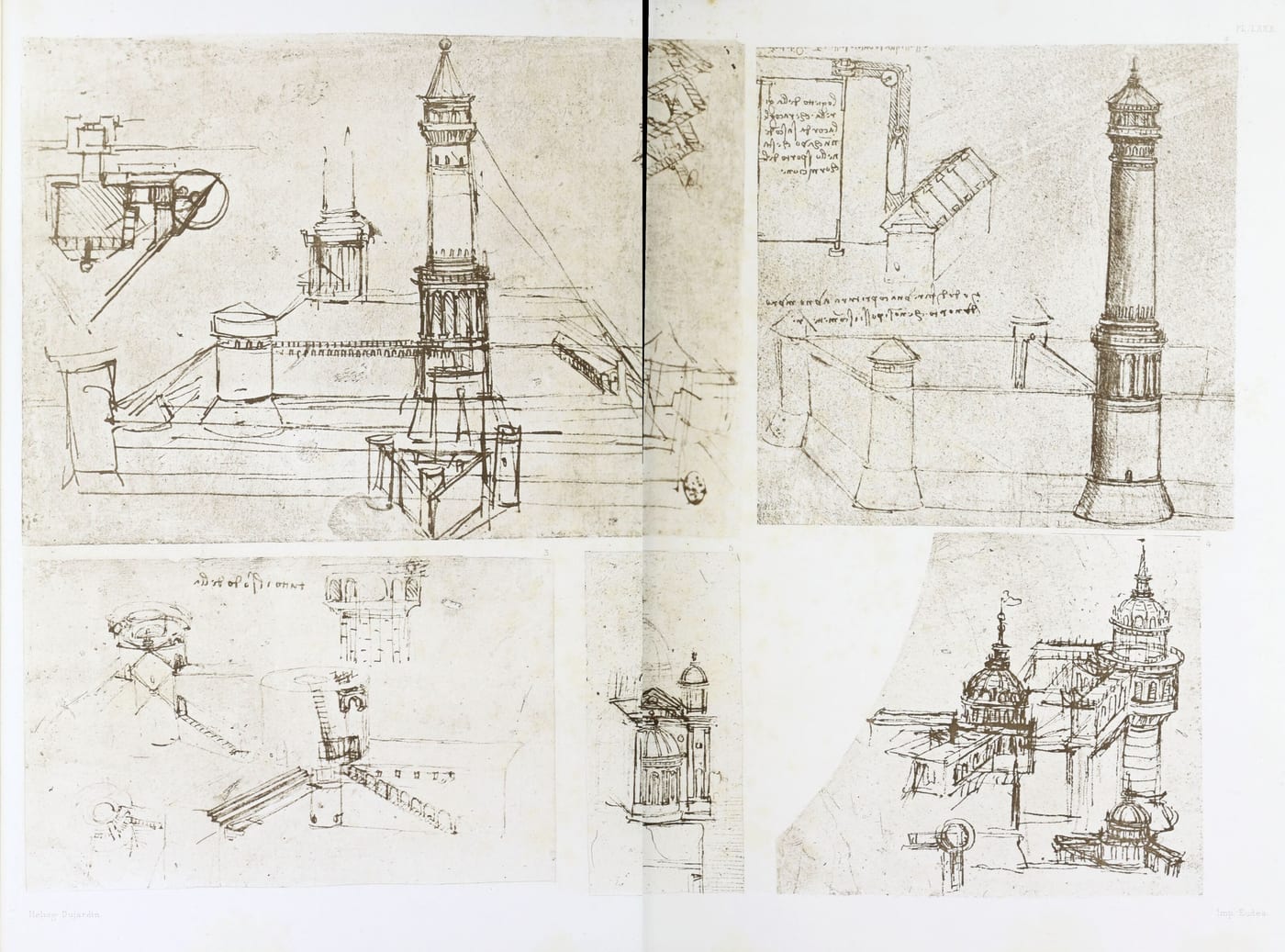
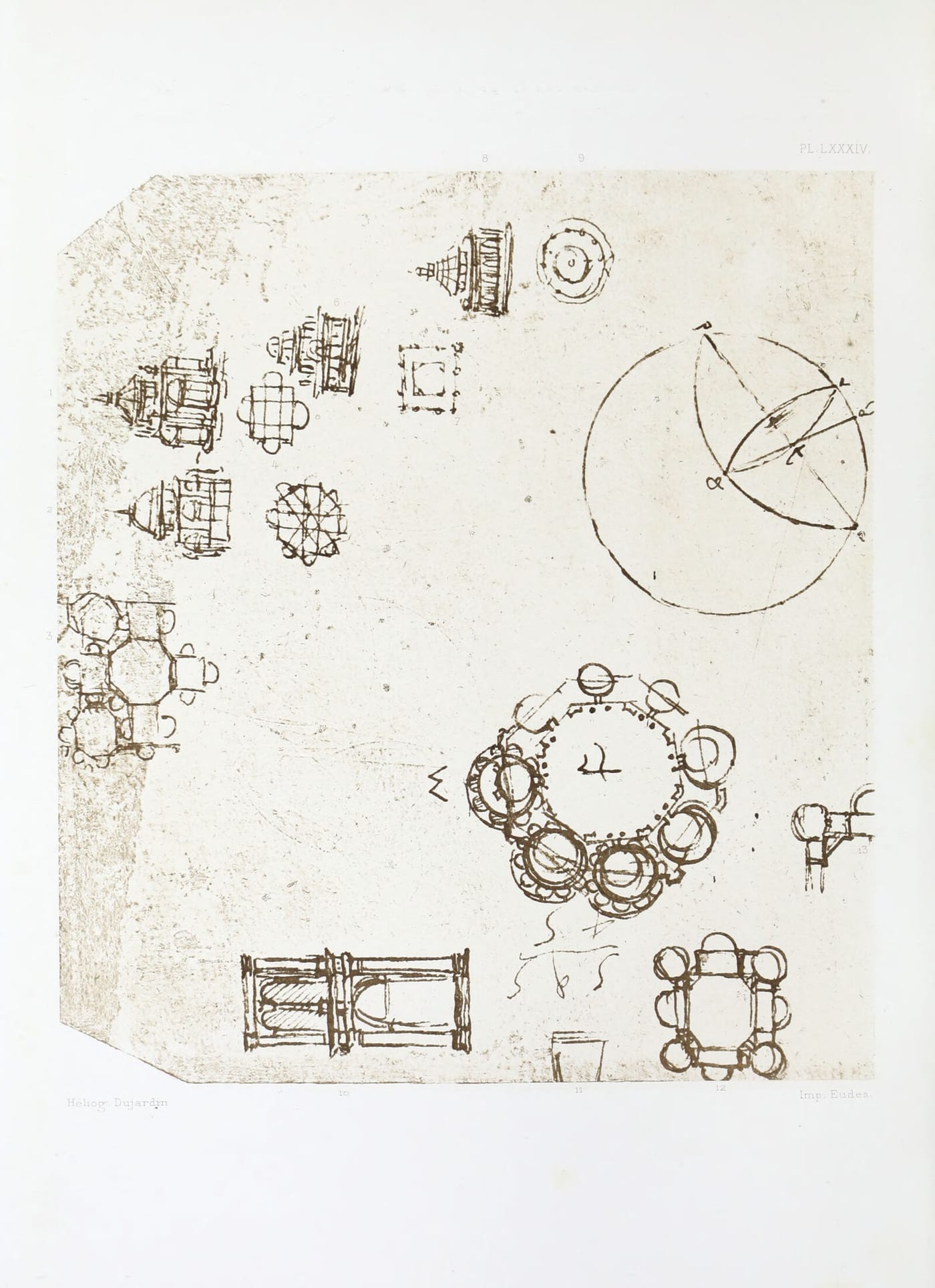
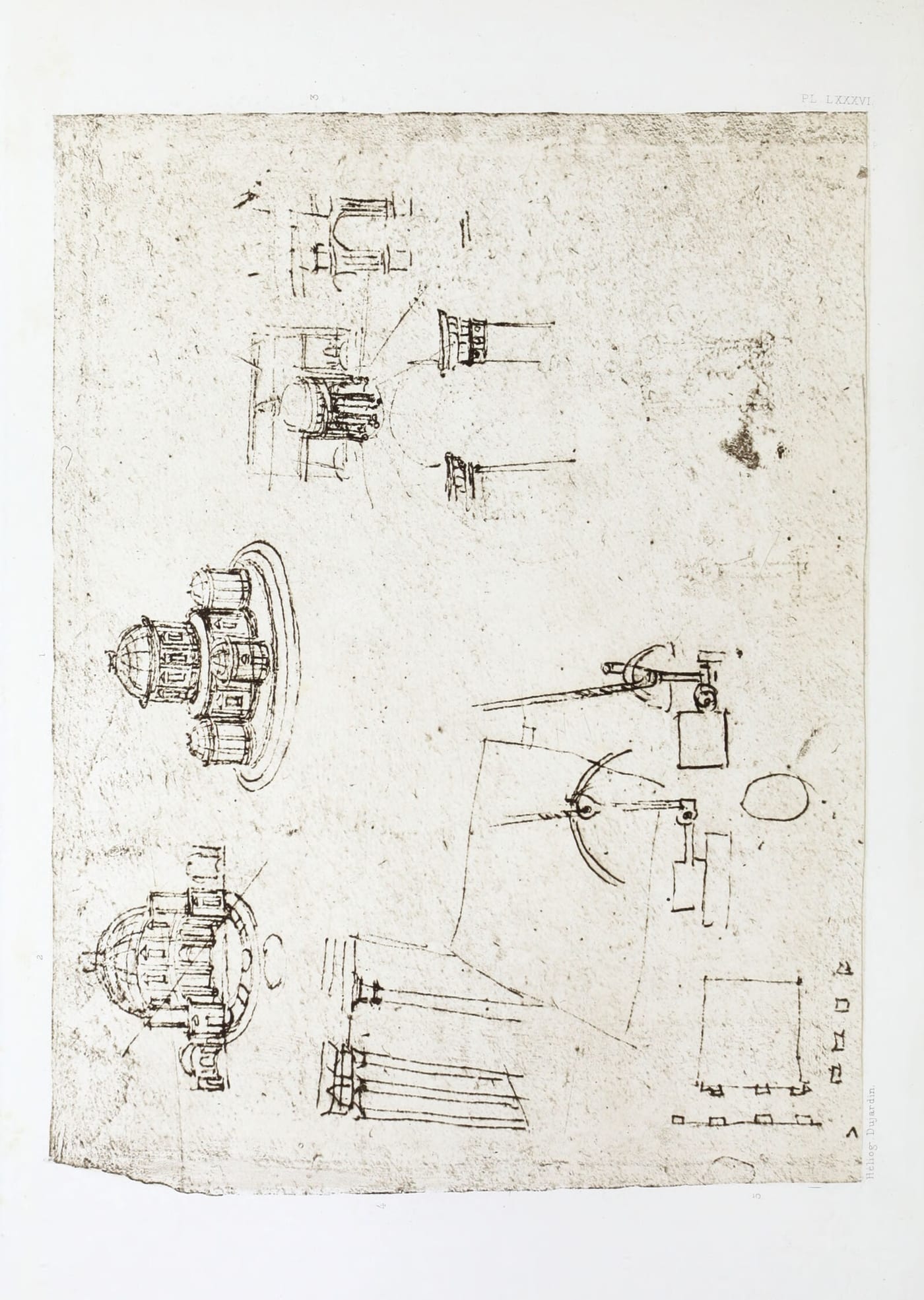
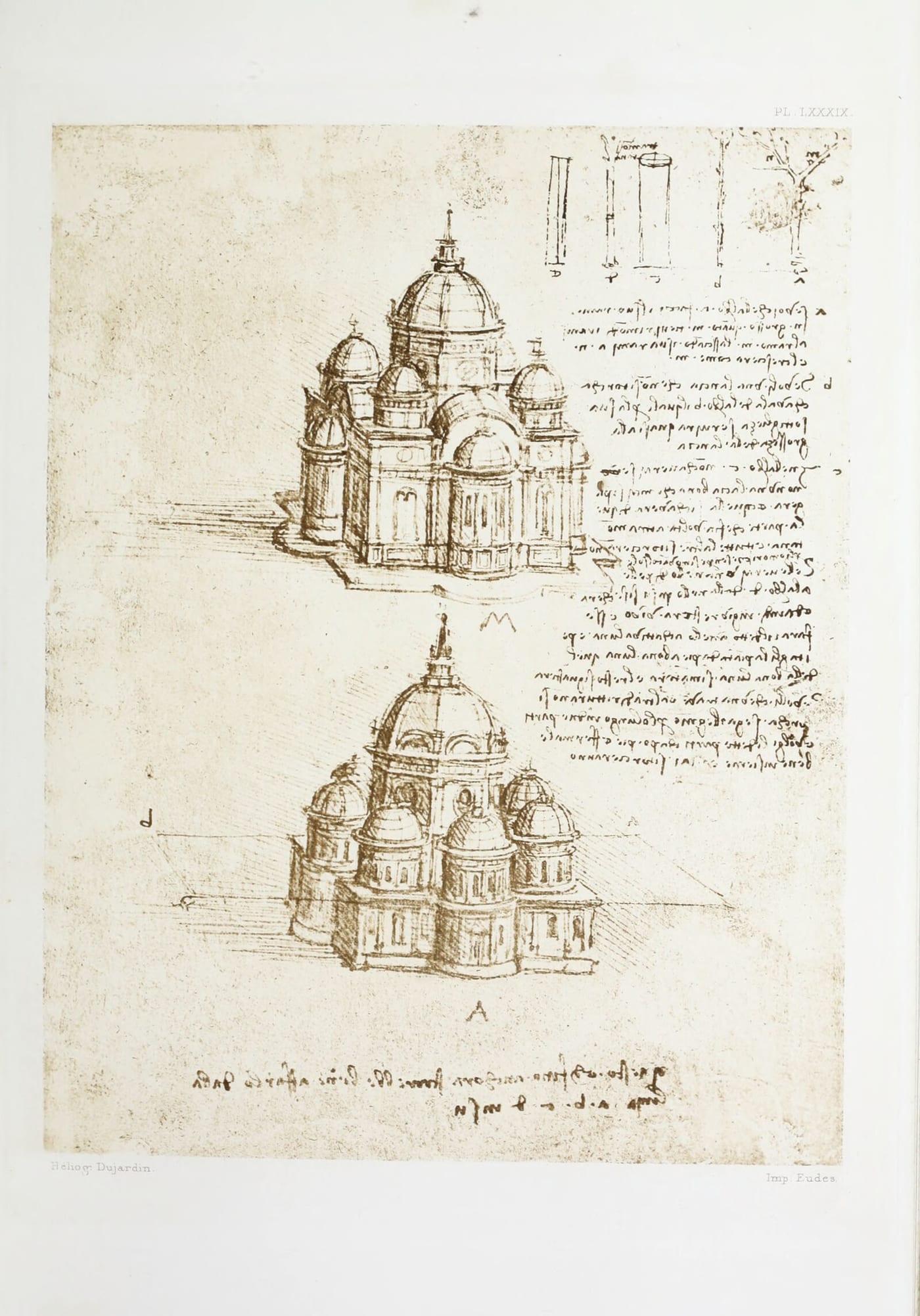
Richter printed these drawings in his edition and discusses most of them in his own commentary; no passage of Leonardo’s cites them directly.